


Editor’s Note: This is Part III of a four part series on the implications and effects of the International Conference on Population and Development that took place twenty years ago in Cairo. Find Part I here and Part II here.
As the UN takes stock of fifteen years of Millennium Development Goals and twenty years of International Conference on Population and Development (ICPD) policies, the same themes repeatedly emerge: the creation of these mammoth programs were important achievements in their own right, but gaps remain in implementing them. Nowhere are these gaps more evident than in the area of women’s health: the World Health Organization (WHO) claims that some 800 women die in childbirth every day, most of them in developing countries.
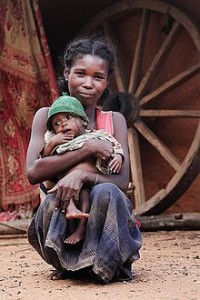 Reducing maternal mortality was a key element in both the ICPD Programme of Action and the Millennium Development Goals (MDGs), in which called for the reduction of the maternal mortality ratio by three quarters between 1990 and 2015. Unfortunately, progress toward meeting this goal has been uneven and slow.
Meanwhile, the same actors who pushed unsuccessfully to establish a human right to abortion in the ICPD negotiations are intent on downgrading maternal health to a subset of the more nebulous – and controversial – “sexual and reproductive health.” Leading the charge within the UN system is the United Nations Population Fund (UNFPA), which was charged with implementing the Cairo agenda. According to UNFPA official Kate Gilmore, “millions of hours, dollars, and miles have been spent to generate an enthusiastic discussion” about what goals the nations of the world should set to replace the expiring MDGs. “We already have the answers. The Cairo programme of action,” she said. “Quite frankly, the post-2015 exercise was more or less completed twenty years ago.”
But how well has the Cairo agenda actually served the women in developing countries? And would they really be better off with more of the same?
Measuring progress
Nobody disputes that the MDG target of reduction in maternal mortality by three quarters has not been reached, although the actual extent of progress is disputed. The WHO claims that maternal mortality has decreased by 45% since 1990, but the independent Institute for Health Metrics and Evaluation (IHME) says the reduction has only been 22%. In 2010, the IHME demonstrated that the WHO was overestimating the rate of maternal deaths, forcing them to recalculate their numbers. The WHO’s revised estimates brought the current numbers into agreement with IHME, but left the 1990 figure close to the same.
While scholars may debate the extent of progress in reducing maternal mortality, it is clear that even the most generous estimates fall well short of the goals set out at the start of the millennium, and demonstrate that twenty years of Cairo policies have not succeeded in making motherhood safe in the poorest countries, particularly in sub-Saharan Africa where deaths in childbirth are significantly more common than anywhere else on earth.
Other areas of the Cairo agenda have been more successful – at least by its own standards. While the UNFPA claims that nearly a quarter of women in Africa have an “unmet need” for modern contraceptives, survey data shows that according to the women themselves, only 8% of women with “unmet need” (less than 2% of all married women) cite access or cost as the reason for not using these methods. In contrast, 28% of “unmet need” among African women was attributable to concerns about health and side effects.
Advancing solutions that work
Despite slow progress on reducing global maternal mortality, the good news is that we have robust data showing what works to make pregnancy and childbirth safe for women. The bad news is that the most effective measures require long-term commitment and large-scale investment. Some of these things – such as increased health care infrastructure, good roads, clean water and sanitation, and access to education for girls and women – will benefit the whole of society, not just expectant mothers. More targeted measures proven to pay dividends include skilled birth attendants, good prenatal and antenatal care and emergency obstetric care.
Emergency obstetric care in particular has been woefully lacking on the international agenda, despite the fact that it can provide solutions to the four main causes of maternal deaths: excessive bleeding, hypertension, infection, and the consequences of botched abortions.
In a recent paper, Belgian experts described the maternal health policy arena as being split between maternal health groups concerned with childbirth and sexual and reproductive health (SRH) groups who advocate for controversial things like abortion and, according to one interviewee, “think that maternal mortality should not be an issue anymore.” Unfortunately, the SRH faction tends to have more political expertise than the maternal health side, and the UNFPA, champions of the Cairo agenda, are spending millions of dollars to advance the SRH position within the UN.
Earlier this year, the UNFPA published its operational review of ICPD since the Cairo conference (which we critique here). This review focused disproportionately on abortion, referencing it more frequently than all other causes of maternal mortality combined.
The reality is that abortion cannot be “safe” for women in places where childbirth is not safe, and for the same reasons: lack of adequate sanitation, transportation, trained health workers, and emergency obstetric care. However, when maternal health is improved, maternal mortality from all causes – including abortion – decrease. This is true even if abortion is prohibited by, as in the example of Chile, which increased its legal protection of unborn children even as it became a world leader in maternal health.
Keeping maternal health central to development
As the UN reviews the progress of the ICPD and the MDGs, both programs are often referred to as “unfinished.” But when people talk about the maternal health MDG being unfinished, they mean that too many women are dying from preventable causes while giving birth. Furthermore, preventing their deaths should not have to mean preventing (or terminating) their pregnancies. In contrast, the UNFPA recently rolled out its strategic plan for addressing the unfinished agenda of ICPD, “with a particular concentration on sexual and reproductive health and reproductive rights.” As the UNFPA’s Kate Gilmore makes clear, they are intent on not only ensuring further decades of ICPD policy, but remodeling the goals to replace the MDGs with more of the same.
The world’s women – in particular, its mothers – deserve better.
 Dr. Rebecca G. Oas is the Associate Director of Research for the Catholic Family and Human Rights Institute (C-FAM) and currently resides in New York. Dr. Oas graduated from Michigan State University in East Lansing, Michigan with a BS in environmental biology and zoology. She earned her doctorate from Emory University in Atlanta, Georgia in genetics and molecular biology, with an emphasis on vascular development and endothelial cell junctions.


