


So the Pope neglects to talk about prayer, the sacraments as means of changing hearts and minds. Nor does the Pope write about heaven, hell and purgatory nor the spirit of Pelagianism scattered throughout the world. Its as if all people have to do is say “no” to lax or no laws causing the bad environment. He does not defend communism or socialism, nor does he explain how massive wealth can be better distributed. If I give a homily on the role of priests, that I do not speak about sisters or cloister nuns or indulgences does not mean I am exaggerating or think less of sisters or the theology of indulgences. Any author has his scope and presupposes that his readers know certain ideas and if they do not, he does not want to turn them off by introducing thoughts they have no clue about.
Judging from a number of negative blogs, it would seem that the latest encyclical letter is worse than Humanae Vitae, which made a natural law demand on individuals who are married. Laudato Si’, on the other hand, asks for debate on the means of ceasing to harm the environment among leaders of nations (political, economic and corporate) and, to a lesser degree, the average “man in the street numbering the billions.” There is not much the latter can do but try to limit legitimate uses of resources like water, air-conditioning or recycle things, or simply live a more frugal lifestyle. But the average person is normally not involved with grave moral acts like those in charge of nation-states and megacorporations.
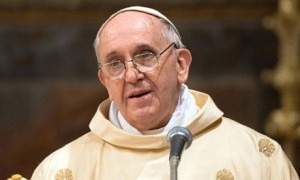 The first thirty articles among others scattered throughout the document of Laudato Si make some bleak portrayals of the damages done to nature by human beings. Some are well known by reading about them in the news or watching televisions. Others are known by poor citizens in countries who have endured the setbacks of deteriorating nature caused by humans that have affect water supplies, and food. For example, Pope Francis avers:
20. Some forms of pollution are part of people’s daily experience. Exposure to atmospheric pollutants produces a broad spectrum of health hazards, especially for the poor, and causes millions of premature deaths. People take sick, for example, from breathing high levels of smoke from fuels used in cooking or heating. There is also pollution that affects everyone, caused by transport, industrial fumes, substances which contribute to the acidification of soil and water, fertilizers, insecticides, fungicides, herbicides and agrotoxins in general.
21. Account must also be taken of the pollution produced by residue, including dangerous waste present in different areas. Each year hundreds of millions of tons of waste are generated, much of it non-biodegradable, highly toxic and radioactive, from homes and businesses, from construction and demolition sites, from clinical, electronic and industrial sources. The earth, our home, is beginning to look more and more like an immense pile of filth. In many parts of the planet, the elderly lament that once beautiful landscapes are now covered with rubbish. Industrial waste and chemical products utilized in cities and agricultural areas can lead to bioaccumulation in the organisms of the local population, even when levels of toxins in those places are low. Frequently no measures are taken until after people’s health has been irreversibly affected.
Even recently in our country, we have learned how the products of the contraceptive pill have entered our water supply and are damaging the fish.
Finally, some scientists claim there are other damages due to carbon dioxides among other elements cause by energy consumption. The media commenting on the encyclical assures that other reputable scientists think of these theories as science fiction (global warming, melting ice caps as “wacko” science and the like). In any case, there are environmental problems in the world, some not so serious, others well known and serious, seemingly depending on what country a person lives in. Pope Francis is careful not to point the finger to any specific country, yet uses language such as more “powerful nations” while at the same time blaming poorer countries for doing some global damage due to the rich members of these poorer countries who gain control of a government. It is not so much a question of who is to blame as what kind of actions have brought some major havoc to parts of the globe and how to mitigate and change attitudes and actions to the environment. However, that does not stop readers from thinking he is criticizing my country, which has done a great deal to protect the environment.
Assuming that the Pope is anti-industry per se contradicts this statement that:
102. Humanity has entered a new era in which our technical prowess has brought us to a crossroads. We are the beneficiaries of two centuries of enormous waves of change: steam engines, railways, the telegraph, electricity, automobiles, aeroplanes, chemical industries, modern medicine, information technology and, more recently, the digital revolution, robotics, biotechnologies and nanotechnologies. It is right to rejoice in these advances and to be excited by the immense possibilities which they continue to open up before us, for “science and technology are wonderful products of a God-given human creativity”.[81]
….Technology has remedied countless evils which used to harm and limit human beings. How can we not feel gratitude and appreciation for this progress, especially in the fields of medicine, engineering and communications? How could we not acknowledge the work of many scientists and engineers who have provided alternatives to make development sustainable?
The Holy Father then continues to elaborate pm the notion that human beings have a kind of infinite dignity and as we treat sister nature poorly, we will do so with humans who depend upon her. There is an inner connecting link. And the same is true in reverse. If we do violence to human beings by abortion among other evils, we more easily do such to nature. Love of God, man and nature as man’s habitat are to be joined together, if one wants to grow in virtue. He will call this “ecological virtue,” a newer way of understanding virtue as the fulfillment of the human person (a phrase introduced by Pope St. John Paul). If a corrupt culture thinks a person has complete and absolute power over his or her body, then such an attitude will pervade in treating nature accordingly. This will (and already has) also promote unbridled desire for profit at all cost, or a free market falsely conceived that ultimately harms both rich and the poor in different ways. Further, what happens when certain vices control the human person is that a culture without a sense of divine and natural law leads its members to considers themselves to be the center of reality instead of in an integrated relationship with God, people and nature. The notion of self-sacrifice, generosity and common good goes by the wayside. He says accordingly:
162. …Men and women of our postmodern world run the risk of rampant individualism, and many problems of society are connected with today’s self-centred culture of instant gratification. We see this in the crisis of family and social ties and the difficulties of recognizing the other. Parents can be prone to impulsive and wasteful consumption, which then affects their children who find it increasingly difficult to acquire a home of their own and build a family.
Many conservative Catholics are upset by this encyclical because Pope Francis accepts some scientific evidence for global warming, the greenhouse effect, and other environmental ills based upon scientists who may even be atheists or in favor of population control. Others are very upset because he speaks against a market economy that seems to contradict a capitalism that has brought about so many wonderful consequences that have helped many in terms of transportation, cure and work. On the other hand, some environmental groups give him accolades because he recognizes their truth about the deleterious state of the globe, and at the same time falsely think that their immoral solutions to these problems will also eventually be given credence by the Church, such as euthanasia, abortion and the like. Whereas, he is in the “golden mean” on these issues, ferreting the truth that can be found in both “left” and “right” concerning environmentalism.
What the media and self-made theologians do not seem to understand is that the Holy Father is trying to give a profound explanation of what moral virtue is to be for an environmentalist as well as for a nation state. He even uses the phrase, “ecological virtues” (88) and the profound need for them to be cultivated. Throughout his prolonged study and synthesis of the previous popes (Bl. Paul VI, St. John Paul, and Benedict XVI, as well as several episcopal conferences, the Compendium and the Catechism on social teaching of the Church), he comes down to appealing humankind that to contemplate the beautiful is to counteract a certain pragmatism that sees the world and people exclusively as useful products which are the bitter fruits of vices, namely, avarice and lust. He does not use these words. Often without using the word “humility,” he teaches the importance both for individual persons and nations of accepting their limitations in solving matters economic and political.
122. A misguided anthropocentrism leads to a misguided lifestyle. In the Apostolic Exhortation Evangelii Gaudium, I noted that the practical relativism typical of our age is “even more dangerous than doctrinal relativism”. When human beings place themselves at the centre, they give absolute priority to immediate convenience and all else becomes relative. Hence we should not be surprised to find, in conjunction with the omnipresent technocratic paradigm and the cult of unlimited human power, the rise of a relativism which sees everything as irrelevant unless it serves one’s own immediate interests. There is a logic in all this whereby different attitudes can feed on one another, leading to environmental degradation and social decay.
123. The culture of relativism is the same disorder which drives one person to take advantage of another, to treat others as mere objects, imposing forced labour on them or enslaving them to pay their debts. The same kind of thinking leads to the sexual exploitation of children and abandonment of the elderly who no longer serve our interests. It is also the mindset of those who say: Let us allow the invisible forces of the market to regulate the economy, and consider their impact on society and nature as collateral damage. In the absence of objective truths or sound principles other than the satisfaction of our own desires and immediate needs, what limits can be placed on human trafficking, organized crime, the drug trade, commerce in blood diamonds and the fur of endangered species? Is it not the same relativistic logic which justifies buying the organs of the poor for resale or use in experimentation, or eliminating children because they are not what their parents wanted? This same “use and throw away” logic generates so much waste, because of the disordered desire to consume more than what is really necessary. We should not think that political efforts or the force of law will be sufficient to prevent actions which affect the environment because, when the culture itself is corrupt and objective truth and universally valid principles are no longer upheld, then laws can only be seen as arbitrary impositions or obstacles to be avoided.
Is this the thought of a Roman Pontiff gone crazy or is he describing a world in the throes of killing itself in a swamp of “no-principles” but my wants and desires and to hell with everyone else? Unlike some who do not care about the globe but exploit it with irreversable harm, The Pope is really arguing that “Mother Nature” is not a “b***h!” but a reflection of God’s infinite perfections.
Father Basil Cole, O.P. is currently a Professor of Moral and Spiritual Theology, Pontifical Faculty of the Immaculate Conception, at the Dominican House of Studies in Washington, D.C. Father is also author of Music and Morals, The Hidden Enemies of the Priesthood and coauthor of Christian Totality; Theology of Consecrated Life. A native San Franciscan, Father has been a prior in the Western province of the Dominicans, a parish missionary and retreat master, and invited professor of moral and spiritual theology at the Angelicum in Rome.
Articles by Fr. Cole:


