


How does one fall in love with life? He delights in play like a child. He falls in love with a woman who is beauty incarnate. He experiences the birth of his children. He is touched by the profound goodness of another person and filled with a lifelong gratitude. He experiences a dream come true, an answer to a prayer, a miracle that changes his life. He experiences the wonder of great art in music, architecture, or literature. Or he discovers the hand of God in some great providential event. To fall in love with life in these or other ways is to remember the event, to share the story, to wish this happiness upon others, to pray for others, and never to doubt the inestimable value of life as the greatest good.
However, in the grim reality of the culture of death that legalizes abortion and euthanasia, separates sexuality from procreation, and advocates population control, no one falls in love with life. It is not essentially, absolutely good. It is cheap, it is dispensable, it is optional, it is conditional, it is arbitrary, it is accidental. It is not wanted. It is an inconvenience, a burden, an obstacle to a career or an education. It can be killed, dismembered, sold for body parts, and used in research. While the advocates of the culture of death possess life, they hardly relish or savor it. For to love, cherish, and value life as precious is to share, communicate, or perpetuate its goodness. A love of life rejoices in the gift and marvels at its greatness with gratitude and appreciation. David expresses this gladness in Psalm 23, “My cup overflows.”
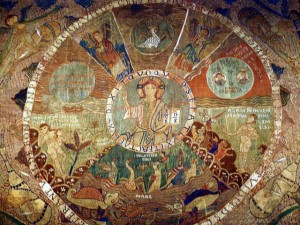 A love of life inspires an outpouring of generosity. In Genesis, God’s love creates the abundance of heaven and earth fills it with copious variety and fullness to be communicated to the whole human race: “And God saw everything that he had made, and behold it was very good.” Because creation is good, it is loved. And because it is loved, it spreads. In blessing man and woman with the miracle of life and the joy of the Garden of Eden, God commands them to share all the happiness of their joy and love with their children: “Be fruitful and multiply.” Love does not contain or restrict itself but reproduces, multiplies, and overflows. True love bears fruit and perpetuates the goodness of life by transmitting it from person to person and to the next generation. As Louisa May Alcott writes in the final chapter of Little Men, “For love is a flower that grows in any soil, works its sweet miracles undaunted by autumn frost or winter snow, blooming fair and fragrant all the year, and blessing those who give and those who receive.”
Anything that is truly good does not limit or restrain itself. A happy home welcomes all family members, cultivates hospitality to guests, cares for elderly grandparents, and shares its joy on holidays with many invitations. In “The Miraculous Pitcher” Nathaniel Hawthorne compares the abundant goodness of the hospitable home to a miraculous pitcher that never lacks milk because it always mysteriously refills as soon as it empties all its contents. The good hearts of the elderly Baucis and Philemon know no limits and never refuse a guest. Their bountiful generosity resembles the miraculous pitcher that replenishes itself after it pours the last drop: “What was her surprise, therefore, when such an abundant cascade fell bubbling into the bowl, that it was immediately filled to the brim, and overflowed upon the table.” Hospitality originates in a love of life and welcomes guests to participate in all the pleasures a home affords.
Likewise, the Gospel is the good news that the apostles disseminate and spread to all nations, baptizing them in the name of the Father, Son, and Holy Spirit. The same proliferation of love’s goodness governs the activity of the Trinity. In Dante’s The Divine Comedy the love between the Father and the Son generates the Holy Spirit, and the love between the three Persons circulates from one to the other with all the dynamic, rushing energy of constant mutual giving and receiving: “As rainbow begets rainbow in the sky, /so were the first two, and the third, a flame/that from both rainbows breathed forth equally.” God’s essential divine life abounds in eternal being as God defines his nature and happiness with the famous words “I am who am.”
Great art expresses its vision of life’s goodness in masterpieces of painting, music, and literature that communicate the splendor of beauty and truth in the most universal sense: they share the transcendentals known as “the true, the good, and the beautiful” to the widest audience. Great art also overflows and shares its glorious forms that evoke wonder at the supernatural mystery and inexhaustible fullness of life’s great goodness. Just as life delights in life, goodness is diffusive like light and spreads. As Cardinal Newman writes, “Good is not only good, but reproductive of good; this is one of its attributes; nothing is excellent, beautiful, perfect, desirable for its own sake, but it overflows, and spreads the likeness of itself all around it. Good is prolific . . . A great good will impart great good.”
To possess life but deny it to others, to have existence but not to share it, to receive love but not to transmit it defeats the very purpose of life itself—the perpetuation of gifts and blessings designed to be passed down from one person to another and from one generation to the next. To frustrate this natural purpose and design of Mother Nature and God’s plan depreciates the value of the pearl of great price. If the gift not shared, handed down, or offered, then life loses its inherent goodness and intrinsic value. It is not worth giving. It is not essentially good. It is not something to be loved. It should be suppressed, controlled, limited, or even regulated by government. The natural love of life associated with the family undergoes deconstruction and loses its original goodness. Contempt for life, rejection of fertility, and the attack on traditional marriage all derive from the idea that life is not essentially good and therefore does not deserve to be loved, transmitted, or shared. Not to love life is to love death. Not to share life is to let it perish. Not to communicate or perpetuate it is to waste the potent seeds that lead to the happiness of life and eternal life.
David’s cup overflows, the Miraculous Pitcher never empties, love is fruitful, the good is reproductive and prolific, the good news of the Gospel spreads, and the Trinity never stops generating and circulating love because life is prized. Wherever life is a treasure, there also is the heart. Where the heart is, there too is love. Where love is, outpouring, overflowing, emptying, and reproducing follow. To be alive and not love life is the ultimate blindness and the worst ingratitude. To receive life and then to prevent it, destroy it, or prohibit it is to scorn the gift, depreciate the treasure, and refuse love. This repudiation of love, then, is the origin of evil in all its forms and shapes, for to refuse love’s reproductive goodness is to embrace death’s destructive evil. The morbidity of the culture of death is the death wish, the suicide note, and the dark despair that haunt the world and proclaim that the cup is empty, miraculous pitchers do not refill, love does not exist, the so-called good is not anything special, the Gospel is archaic, and the Trinity is only a number. The culture of death denies the first, most self-evident truth of all: “And behold it was very good.”
 Mitchell Kalpakgian, Ph.D. has completed fifty years of teaching beginning as a teaching assistant at the University of Kansas, continuing as a professor of English at Simpson College in Iowa for thirty-one years, and recently teaching part-time at various schools and college in New Hampshire. As well as contributing to a number of publications, he has published seven books: The Marvelous in Fielding’s Novels, The Mysteries of Life in Children’s Literature, The Lost Arts of Modern Civilization, An Armenian Family Reunion (a collection of short stories), Modern Manners: The Poetry of Conduct and The Virtue of Civility, and The Virtues We Need Again. He has designed homeschooling literature courses for Seton Home School, and he also teaches online courses for Queen of Heaven Academy and part-time for Northeast Catholic College.


