


A fanatic is obsessed with one idea, a person often called a monomaniac like Captain Ahab in Melville’s Moby Dick fixated on killing the white whale that attacked his whaling vessel and severed his leg. While ostensibly commanding a whaling ship in a business venture to hunt whales for oil, Ahab gradually reveals his real agenda—revenge against Moby Dick. Soon diverted from the commerce of the whaling expedition, Ahab risks the lives of all his crew members and deliberately hunts, attacks, and provokes the white whale to gratify his idea of revenge, oblivious of the safety of the crew or the great dangers to the ship. G.K. Chesterton identified the fanatic as a madman, one whose mind has lost its playfulness, imaginative power, and flexibility. His rigid logic and one-dimensional mentality twist reason to concentrate on a single part while ignoring the greater whole: “Mathematicians go mad, and cashiers; but creative artists very seldom,” Chesterton writes in a chapter entitled “The Maniac” from Orthodoxy. He continues, “The poet only asks to get his head into the heavens. It is the logician who seeks to get the heavens into his head. And it is his head that splits.” The fanatic, then, concentrates on one thing but does not see the whole. To gain one thing, he sacrifices the whole for the part. He reduces the multiplicity of things to one predominant idea that he exaggerates out of proportion to the larger whole or the common good.
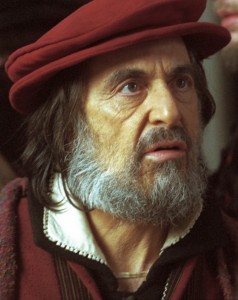 The vengeful easily fall into the category of the fanatic. They go to elaborate length to carry out their vengeance with ingenious schemes that preoccupy their minds and compel them to do drastic, extreme things. Shakespeare’s Shylock in The Merchant of Venice is determined to exact the letter of the law and literally demands his “pound of flesh” when Antonio, his creditor, fails to repay his loan on time. Shylock is fanatical in his hatred of Christians and compulsive about money. He is enslaved by wrath, avarice, and envy. Valentin, the police chief in Chesterton’s “The Secret Garden,” a French freethinker and rationalist from the school of the French Revolution, despises the Catholic Church with such bias that he arranges to murder a wealthy convert, Julius Brayne. Once “the hearty Yankee who believed in all religions,” Brayne has converted to the Catholic faith and bequeathed his great fortune to the Catholic Church: “Brayne would pour supplies into the impoverished and pugnacious Church of France.” The atheistic Valentin who believes in no religion but despises the Catholic faith has devised a complex plot to murder the wealthy philanthropist and shift the blame on an innocent guest at his evening party—an occasion which many guests from different backgrounds and religious beliefs attend to give the false impression of Valentin’s broadminded tolerance to beliefs that conflict with his own. Valentin has even invited a Catholic priest, Father Brown, to remove any suspicion of his prejudice against Catholics.
When Father Brown discovers that Valentin has himself murdered Brayne, decapitated him, and substituted a head from the guillotine for the head of the murdered man, he explains, “But did you ever see in that cold, grey eye of his that he is mad? He would do anything, anything, to break what he calls the superstition of the Cross.” In its modern version of political correctness, separation of church and state, tolerance, court decisions, and moral relativism, this rabid fanaticism continues against the Catholic Church today. Only Supreme Court judges have authority to determine whether or not life is sacred or life begins at conception, not two thousand years of Christian moral teaching. Pro-abortion organizations like Planned Parenthood only counsel for abortion and crusade for its continued legalization during all nine months of pregnancy regardless of the pain inflicted on the child in the womb, regardless of the evidence of ultrasound, and regardless of the multiple medical risks to the mother. This fanaticism insists on abortion, not adoption. It does not allow for parental notification, a twenty-four hour waiting period, or the limitation of abortion to the first trimester. This madness demands that all health care insurance in the form of The Affordable Care Act provide tax-payer funds for universal abortion without any restrictions. There are absolutely no exceptions. Everyone seeking an abortion–no matter the age, the mental state, or medical condition–deserves this free choice without any counsel or deliberation from other sources. Only legal opinions matter, not the accumulated wisdom of the ages, right reason, or natural law.
Fanaticism brooks no compromise, no moderation, no reasonable exceptions, no religious views. The whole nation and the whole world need to legalize abortion, euthanasia, same-sex “marriages” as universal rights in the name of freedom of choice and equality under the law. Any form of disagreement, objection, or resistance amounts to hate speech or an irrational phobia requiring legal intervention or sensitivity training. Uniformity of belief is the only legitimate point of view. Political correctness demands a rigid political orthodoxy that disregards all opposing views, whether based on science, religion, tradition, or common sense. In the fanatical politically correct world no middle positions or conflicting views deserve serious consideration. It makes no difference that RU-486 kills women. It does not matter that infants in the womb experience pain and recoil in self-defense. It is of no concern that abortion causes cancer and a host of other medical complications. It is insignificant that women suffer post-abortion-stress syndrome and suffer depression, nightmares, and despair. The politically correct view is the only tenable position and distinguishes the enlightened, the progressive, and the educated. The politically correct and the fanatical are one and the same.
On the other hand, the Catholic Church is hated by the monomaniac and the atheist for imposing its religious beliefs on a multicultural, diverse society. The ideology of political correctness condemns the Church’s dogmatic, unchanging moral views on contraception, abortion, divorce, euthanasia, and same-sex unions as extreme or “fanatical.” The Church, however, does not threaten, coerce, punish, fine, or intimidate anyone who does not embrace the Christian faith. While it evangelizes, it always respects the inviolability of conscience and repudiates conversion by the sword or by any form of violence. While it teaches, it does not dictate. It does not indoctrinate or propagandize. It appeals to God’s revelation, Scripture, tradition, reason, and the natural law. While the Church teaches that the Catholic faith is universal—one, holy, Catholic, and apostolic—it acknowledges that God’s grace is not bound to only the Seven Sacraments and that salvation is not limited only to the baptized members of the Church. While the Magisterium exercises infallibility in matters of faith and morals, the Church also embraces the universality of truth from other sources. In the words of St, Thomas Aquinas, “All truth, whoever said it, comes from the Holy Spirit.” The Church deals with all of reality, material and physical, and concerns itself with all aspects of man’s life—social, economic, physical, intellectual, and moral. It is not, like Ahab, Shylock, and Valentin, maniacal about one thing only.
While the Supreme Court’s narrowness rejects the universal truth about the immorality of abortion and the meaning of marriage by a decision of a few votes, the Church’s moral law is for all ages–the same yesterday, today, and tomorrow. While Ahab sacrifices an entire crew to death by hunting the white whale and courting tragedy—sacrificing the lives of sailors for his personal vendetta—the Church always acts in the name of the common good. While hate, envy, and revenge motivate Shylock to demand death at all costs with his cry for a pound of flesh, the Church in her mercy offers confession, forgiveness, and mercy again and again, seventy times seven. In short, the name of evil is not only legion but also fanaticism—death as the solution to all problems, revenge as the equivalent of justice, obsession as the image of truth, and madness as the clothing of irrefutable truth.