


I was enjoying a cup of coffee at my favorite breakfast nook while scanning the New York Times. And what did my wondering eyes see appear, but a most unlikely opinion piece entitled “Why I Am Pro-Life.” Has the pro-life message finally gained enough credibility that even the Times deems it fit to print? Was I being prepared for elation or disappointment?
As I began reading the article, I did not get the sense that the author was really pro-life. Then the clincher! The author of the piece, Thomas L. Friedman, hails New York City Mayor, Michael Bloomberg as his pro-life model. Apparently, favoring abortion on a wide scale does not compromise one’s pro-life credentials. The problem with the “anti-abortionists” is that their view is too narrow to qualify them as being truly pro-life.
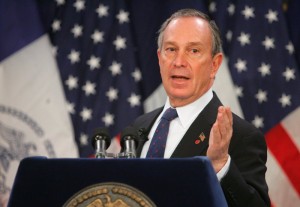
New York City Mayor Michael Bloomberg
While the Mayor upholds a woman’s “right” to abortion, he manifests his pro-life credentials in so many positive ways, as Friedman goes on to explain: from banning smoking in bars and city parks to banning the sale of large sugary drinks; from instituting the ban on assault weapons to his support for early childhood education. “Now that is what I call ‘pro-life,’” Friedman exclaims.
Although he believes that the Mayor’s approval of abortion does not sully his pro-life status, he does not allow comparable exemptions for pro-life people who do oppose abortion. For example, he deplores anyone who claims to be pro-life and yet wants to shut down the Environment Protection Agency.
According to Friedman’s calculus, a true “pro-life” person can be pro-abortion, but the so called “pro-lifers” must favor Friedman’s preferred policy positions in every imaginable way, even those whose value are unclear, uncertain, and unproven. Must all pro-lifers board the bandwagon for “global warming?” Can a person be truly pro-life if he happens not to agree with a “requirement for posting calorie counts in menus in chain restaurants?” Could Mother Teresa meet such a rigid standard? The double standard that Friedman proposes is painfully obvious.
Nonetheless, Friedman would not be satisfied even if pro-life people were pro-life by adhering to every “pro-life” activity on his lengthy list. He has no patience, for example, with anyone who believes that every unborn human life is sacred, no matter how the conception took place. He is vehemently critical of those who take “uncompromising positions on abortion.”
Those who hold firm to Friedman’s “pro-life” activities, however, do so, not uncompromisingly, but presumably with consistency and with unswerving commitment. The real pro-life people for Friedman are not like the extremist variety, but those who conform to the “consensus.” But surely the “consensus” in America today is not “pro-life” in any sense. Friedman’s standards are shifty to the point of incoherence.
He denounces Richard Mourdock, Republican Senate candidate in Indiana, for stating that all unborn human beings deserve the same respect, and that the circumstances surrounding their conceptions does not alter the sacredness of their lives. This is simply a logical point, a mere application of the principle of equality. It is comparable to saying that all Americans deserve the same respect, one that should not be altered on the basis of race, gender, religion, ethnicity, or sexual orientation. But Friedman argues that if one applies the principle of equality to the unborn, he is not being fair and liberal, but personifying extremism.
The next person on Friedman’s hit list is Missouri Representative Todd Akin for recognizing that the word “rape” has been hijacked by people who are truly extremists. Susan Brownmiller defined rape in her best-selling book, Against Our Will: Men, Women and Rape as “nothing more or less than a conscious process by which all men keep all women in a state of fear.” The success of this book earned the author not opprobrium from men, but a place on the cover of Time. Many feminists contend that rape is any act of intimacy, even within marriage, that is initiated by the man. Some feminists have gone so far as to aver that the first four notes of Beethoven’s Fifth Symphony are about rape.
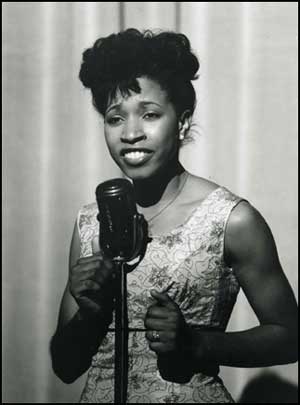
Ethel Waters was conceived through rape and became a successful jazz singer.
Akin could have done a better job elaborating on the meaning of what he said, but the core of his comment is defensible. Nonetheless, he needed to express more outrage over the evil of rape and should have expressed more concern for its victims. There would be a time for philosophy and theology, but not under politically charged circumstances in which incomplete and unsatisfactory responses are almost inevitable. Tact, and even compassion, often lies in what one does not say.
Akin oversimplified the case, but he was not entirely wrong when he pointed out that under the stress of being raped, a woman’s body recoils, rendering conception less likely. Friedman calls this “voodoo science.” It has been shown, however, that even when husband and wife are strongly and lovingly committed to achieving pregnancy, stress becomes an inhibiting factor (See J. G. Schenker, et al., “Stress and Human Reproduction,” European Journal of Obstetrics & Gynecology and Reproductive Biology, Vol. 45, 1, pp, 1-8, June 1992: “The biological interaction between stress and infertility is the result of the action of stress hormones at the brain level, especially on the hypothalamus-pituitary and on the female reproductive organs.”).
If we approach infelicitous comments with charity and honesty, as we should, we can understand Mr. Akin’s point. The fact remains that conceptions can result from rape. The point remains, however, that a child so conceived is not doomed to a miserable life.
Ethel Waters was conceived through rape to a girl in her early teens in a dismal suburb of Philadelphia. Despite her inauspicious beginning, Miss Waters became an immensely successful jazz singer, a distinguished stage and screen actress, and author of her own inspirational life story – His Eye Is On the Sparrow.
Personally, I prefer the optimism of that outspoken opponent of injustice, Harry Emerson Fosdick, to the pessimism of Thomas Friedman. As that distinguished American pastor once said, “Often the best friend a man has is not comfort, but the challenge of antagonistic environment.”
Although Friedman’s piece was disappointing, it was not surprising. Perhaps, I mused, my cup indicating that it was time for a refill, that one more item should be added to the list of “things to be banned” in the interest of being thoroughly pro-life. And that additional thing should be The New York Times, for “All the news that fits” routinely excludes “all the news that’s fitting.”
 Dr. Donald DeMarco is a Senior Fellow of Human Life International. He is professor emeritus at St. Jerome’s University in Waterloo, Ontario, an adjunct professor at Holy Apostles College in Cromwell, CT, and a regular columnist for St. Austin Review. His latest works, How to Remain Sane in a World That is Going Mad and Poetry That Enters the Mind and Warms the Heart are available through Amazon.com.
Articles by Don:


