


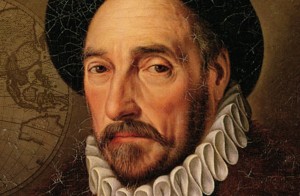
In Montaigne’s “On Repentance,” an essay written in the late sixteenth century as part of his autobiographical collection known as Essays (1588), the French Catholic writer who lived through the period of the Protestant Revolt, the colonization of North American and South America, and the scientific revolution of Copernicus presents a view of conscience that reflects all the modern errors about this moral faculty. He explains, “. . . I often repeat, that I rarely repent, and that my conscience is content with itself, not as the conscience of an angel or a horse, but as the conscience of a man.” Apparently the conscience of a man need not be too scrupulous or sensitive.
Although a nominal Catholic, Montaigne considers himself as the best and final arbiter of his choices and actions and does not submit to any higher authority or law than his own private judgment. He does not feel bound by natural law or by the magisterial teachings of the Church. He views conscience as a personal, subjective, individualistic opinion separate from any other tribunal. The moral views of others he finds untrustworthy, and he claims that he would have committed no wrong if he had disobeyed all the moral warnings of good friends: “. . . I should not have been much amiss if I had done what to their notions was wrong, instead of what they considered right.” Montaigne is the moral expert whose judgment is more unerring than the consensus of others.
 While the Church’s teaching about conscience does not make man his own ultimate judge but subjects him to universal laws and higher standards than private opinion, Montaigne argues that he only is qualified to best evaluate all the special circumstances of his situation and his own unique nature. No one knows or understands the individual more than the person himself: “Others have no vision of you, but judge of you by uncertain conjectures . . . . Do not rely on their opinions, therefore; rely on yourself.” On the other hand, the Catechism of the Catholic Church distinguishes between “a well-formed conscience” and “erroneous judgment,” clarifying that an informed conscience is “upright and truthful,” “in conformity with the true good willed by the wisdom of the Creator,” and “enlightened by true faith” (#1783, 1794). The conscience must avail itself of other knowledge and additional criteria besides its own verdict.
The Catechism also warns of the ignorant conscience that “takes little trouble to find out what is true and good, or when conscience is by degrees almost blinded through the habit of committing sin” (#1791). The word conscience in its Latin origin means to “know with”—to know in union with the teaching of the Church, the Commandments of God, and the infallible pronouncements of the Magisterium. Montaigne’s modern idea of conscience, however, dissociates it from all higher authority, universal law, and divine origin. When Montaigne claims, “I have my own laws and my own court to judge me, and I refer to these rather than elsewhere,” he is separating conscience from “a law inscribed by God” in the heart and not identifying it as God’s voice, “a messenger of him, who both in nature and in grace, speaks to us behind a veil” (#1776, 1778).
Montaigne confesses that he frequently regrets but never repents because of natural weakness he cannot overcome: “I can do no better. And repentance does not properly apply to things that are not in our power.” Throughout the Essays, Montaigne absolves himself of moral responsibility and free will by blaming uncontrollable forces out of his control: “I have committed some serious and grievous errors in my life, not for lack of good judgment but for lack of good fortune.” Because of the inconstancy of fickle Fortune (“things are always moving and changing”), Montaigne finds moral certainties elusive and unreliable. Man’s lot compares to “a feather in the wind.” Montaigne admits that if he were to live his life all over again, he would feel no remorse for any sins he committed because “I should live as I have lived; I neither deplore the past, nor fear the future.”
Montaigne’s version of conscience, then, dominates much of modern moral judgment. Catholic lawmakers and judges who claim they are personally opposed to abortion but do not wish to impose their moral views upon others subject the moral teaching of the Church to their precarious political circumstances which they imagine as allowing for exceptions. Married Catholics who practice contraception justify their disobedience of the Church’s teaching as a matter of conscience in which their own views and special situation deserve more authority than the infallible judgments of papal teaching.
Those who divorce and remarry without annulment make themselves the tribunal of their own case and also expect the Church’s perennial truths to bend to their individual cases. The Church must adapt to each person’s unique set of problems and complications, but the conscience feels no compulsion to obey the Church’s doctrines. All those who dissent from the Church’s condemnation of unjust wars and preventive wars rationalize their disagreement as “prudential” judgments that elude the scrutiny of conscience. Those who choose same-sex marriage on the basis sexual orientation and birth also appeal to the special circumstances of their dilemma that merit an exception from the general rule and new moral standards for their unique problem. Supreme Court decisions reject the wisdom of the past, the precepts of the world’s religions, natural law, and the moral norms of Western civilization to make exceptions for imaginary rights and sufferings in the name of privacy. Roe v. Wade uses as its moral touchstone “the life of the mother” or “the psychological health of the mother” to justify abortion for any reason and at any stage of pregnancy.
The modern conscience, then, is never binding but always evolving. When the laws and customs of a culture undergo revolution, the radical changes always pose as higher stages of moral development in the name of freedom, privacy, progress, and enlightenment. For Montaigne the ever-present reality of constant change (“The world is but a perpetual see-saw. Everything goes incessantly up and down”) makes moral knowledge uncertain and relative. For all who live in the wake of the sexual revolution, the Catholic Church must change to alleviate the guilt of all who need abortion on demand, free contraceptives, divorce and remarriage, and same-sex unions. Like Montaigne, those who advocate, legalize, or engage in these activities do not “repent” because truth is relative, and they are the best judges of right and wrong.
Man’s law trumps natural law and divine law. There are too many exceptions for a universal standard. Modern man’s higher knowledge of particular circumstances, individual cases, and special considerations presumably offers more light and truth than the accumulated experience of the entire human race, two thousand years of Christian civilization, the Magisterium of the Church, and the common sense of the ages of ages. The modern idea of conscience, then, pays lip service to morality but obeys no higher moral authority than man’s desires, pleasures, self-interest, or expedience. Every person’s private conscience is the judge and jury that reach the verdict without any need for any higher law or universal standard.
 Mitchell Kalpakgian, Ph.D. has completed fifty years of teaching beginning as a teaching assistant at the University of Kansas, continuing as a professor of English at Simpson College in Iowa for thirty-one years, and recently teaching part-time at various schools and college in New Hampshire. As well as contributing to a number of publications, he has published seven books: The Marvelous in Fielding’s Novels, The Mysteries of Life in Children’s Literature, The Lost Arts of Modern Civilization, An Armenian Family Reunion (a collection of short stories), Modern Manners: The Poetry of Conduct and The Virtue of Civility, and The Virtues We Need Again. He has designed homeschooling literature courses for Seton Home School, and he also teaches online courses for Queen of Heaven Academy and part-time for Northeast Catholic College.


