


A group of Progressives identifying themselves as “Sansculottes” have found the custom of wearing clothes restricts freedom of movement and expression. In their view, the norm of covering and adorning the body is not a reasonable custom, an expression of modesty, a form of propriety, or a sign of human dignity. It has no sound legal basis that justifies enforcement for the common good but amounts to no more than “an artificial construct”. It is merely a quaint practice of the past that no longer applies to a more enlightened age keenly aware of its absolute rights and the evolution of a new consciousness. No one has a right to impose his view of clothing on persons who have no interest in wearing them, in changing styles, or in needing to be dressed according to dress codes or uniforms. Progressive thinking on the sartorial art has evolved to a more highly developed understanding than the conventions of earlier ages—the ostentation of Elizabethan England, the rigid formality of the Augustan Age with its powdered wigs, and the prudery of Victorian respectability.
The Progressives reject the convention of formal, professional, or appropriate dress. They label squeamishness about inappropriate or unfashionable clothing as “clothesophobic,” an irrational overreaction resulting from bias and narrow-mindedness that lack tolerance and suppress human freedom.They condemn these inhibitions as mere subjective or religious opinions that lack binding authority. Clothesophobia is a vice that needs correction by re-education. It is a defective state of mind that requires reparative therapy. The Sansculottes dismiss the entire idea of a “normative consciousness” determined by human nature, perennial custom, natural law, and the weight of tradition as having the final word on this subject. They repeat that “Different nations have different customs” and there is no right or wrong on the subject of clothing styles. When challenged about their unorthodox views that contradict the accumulated experience of the entire human race over millennia, they respond that modern enlightened ideas are independent of the superstitions and ignorance of earlier generations.
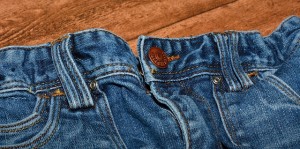 The Sansculottes eschew the vanity of kings and queens on parade displaying regal finery on occasions of pomp and circumstance. They find elaborate wardrobes extravagant wastes of money and cumbersome baggage. They find all the rituals of clothing petty and finicky—all the time spent in shopping, looking for new styles and colors, looking in the mirror for the perfect effect, and purchasing attire for all occasions and weather an utterly vainglorious activity that serves no purpose. These empty rituals are merely the antiquated mores of a bygone age. There is no proper or improper, modest or shameful, elegant or ostentatious, beautiful or ugly in matters of clothing. “About tastes there is no disputing” (de gustibus non est disputandum) they frequently repeat.
Not winning immediate popular approval for their innovative ideas, the Sansculottes advance their case through other channels. They raise a hue and a cry about their victimization: they suffer discrimination and persecution because they represent a minority who deserve the same civil rights and equality under the law that the fashionable have enjoyed in the course of history. They argue that they are innately averse to beautiful clothing and alluring fashions and resent any attempt to reform or modify their views. They identify themselves as an oppressed group, the victims of hate because no one compliments their appearance, welcomes their views, or approves their public conduct. They plead for compassion, equality, understanding, and acceptance in the name of justice. They claim that restaurant owners who refuse to allow them admission or service have violated their civil rights and acted judgmental. Despite public protests and demonstrations, the Sansculottes have not persuaded the general public or evoked sympathy for their cause.
Exasperated by the political process to gain their civil rights, they have presented their case to the judges and appealed for a court ruling. After lengthy debates and deliberation, a majority of the justices find nothing in any state constitution or the U.S. Constitution that imposes the obligation of proper clothing in public appearances. The laws of the land neither forbid freedom of clothing nor require specific dress for the many official functions and social occasions people attend. While references to “formal attire,” “professional dress,” and “public decency” appear in various statements, the term is equivocal and not explicit enough for precise legal definition. Since no laws absolutely condemn so-called “immodest” clothing, the right to one’s own interpretation of “decent” and “modest” and “professional” is presumed to exist in the penumbras of the Constitution as simply an extension of other freedoms guaranteed such as the freedom of assembly, the freedom of worship, and the freedom of the press. If one can say what one wishes and worship as one chooses, why cannot a person dress or not dress as he desires, reasoned one of the judges.
Another judge’s interpretation deduced that no one knows with scientific evidence what “proper,” “modest,” or “decent” means. What part of the human body does it involve? Does it pertain to the head, the feet, the front, or the back? This great moral ambiguity does not justify the denial of basic rights to the Sansculottes, opined the majority of the judges. Babies come into the world without clothing, babies crawl and appear nude, babies appear exposed when they are being cleaned. Babies are sometimes dressed fully, sometimes half-dressed, and sometimes naked. If babies are permitted such a wide spectrum of dishabille, why are adults guilty of the violation of law while children are given special privileges? Equality under the law requires that no form of discrimination penalize the pursuit of happiness. Coercion and constriction into rigid categories of clothing requirements and specific items of apparel are “unconstitutional .”
By a narrow margin of one vote, the justices decide that the word “clothing” needed redefinition to become more inclusive and conform to modern trends of lesser, scantier, informal, or no clothing. One statement read, “People in modern society organize their lives on the availability of many choices in matters of apparel.” After all, history shows that clothing has assumed many forms and styles throughout different cultures and ages. Clothing need not be limited to “proper,” “decent,” “dignified,” or “respectable” but can also easily include “improper,” “indecent,” “undignified,” and “disrespectable.” Clothing does not have only one univocal meaning but evolves with the rising consciousness of more enlightened, advanced thought.
The reaction to the court decision was mixed, showing either approval, apathy, or ridicule. The World Times and The New Post claimed that the legalization of Sansculottism was a great watershed moment in human history and a supreme victory for the cause of freedom. One editorial rhapsodized that it represented “the greatest triumph of democracy in modern legal history.” Another article cited the decision as proof of “the incomparable wisdom and far-seeing vision” of the Founding Fathers for securing a prominent place for the penumbra in the Constitution.
The common man found the whole controversy unthinkable nonsense but did not wish to be labeled stupid, bigoted, or clothesophobic. Simpleminded, he was qualified only to see things in plain black or white and incapable of nuanced thinking. This complex matter required the genius and expertise of the knowledge class: lawyers, judges, professors, and pundits who knew all the mazes and secrets buried in the penumbra. Although they were “personally opposed” to distasteful dress and would never imagine appearing in public in offensive clothing, they did wish to impose their opinions on matters of taste on others.
Thus Sansculottism was decreed the law of the land. One Sunday a simple child who went to the city with her parents to attend church saw the new style displayed in public. Remembering a story about an Emperor, she too immediately reacted. Responding differently from kings, judges, and adults, she burst, “Look, Mommy! Why are they wearing dirty clothing when everyone else is dressed up in their beautiful Sunday best? Why are they appearing in public in underwear and pajamas? Shame on them!”