


A person of fifty years old is the same person who was once five years old. The only change that has occurred is one of development, the natural progression of stages from childhood to maturity. The sturdy oak tree is the same tree that was once a sapling, the only difference its growth in each successive year to achieve the full potential of its nature. The natural law that St. Paul cited in Romans 2:14 (“When the Gentiles who have not the law do by nature what the law requires . . .”) is the same natural law that Martin Luther King, Jr., referred to in “Letter from a Birmingham Jail” to oppose slavery and the same moral law that pro-life advocates cite to condemn the evil of abortion: an unjust law is no law at all.
“What the law requires is written on their hearts,” writes St. Paul. Because human nature does not change, the natural law does not change, except that it develops from its internal principles to address new moral questions by using the same criteria of right and wrong. Likewise, the Catholic Church of the twenty-first century is the same Church that Christ founded and that the Apostles promulgated in the first century, except that its later ideas develop from first principles and latent seeds of thought in need of articulation and clarification. Organic change, then, is natural, normal, and developmental—what Blessed Cardinal Newman in Essay on the Development of Christian Doctrine calls “the germination and maturation of some truth or apparent truth” and “the development being but the carrying out of the idea into its consequences.”
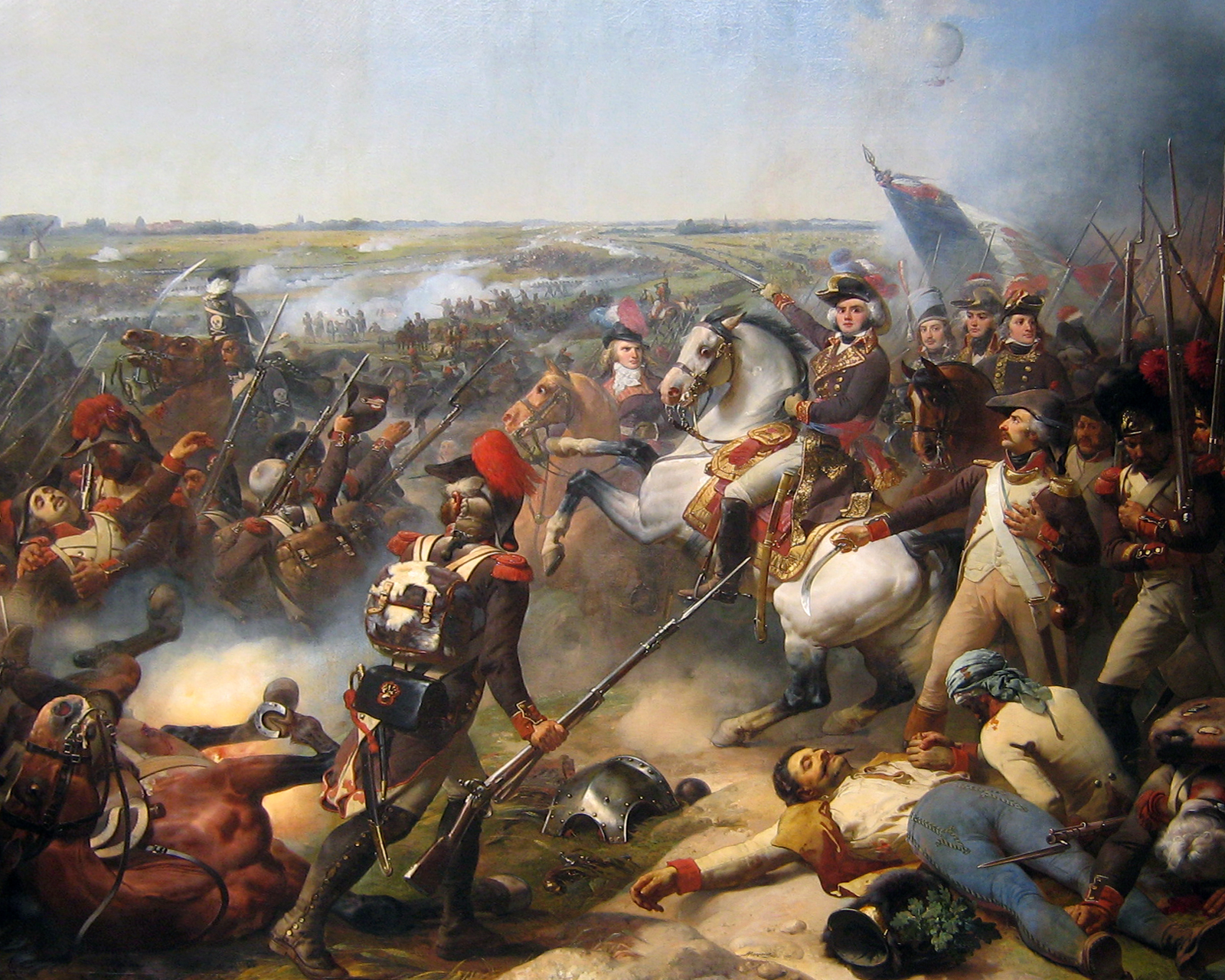
The French Revolution
Radical revolutions, however, do not proceed by way of slow, natural, unfolding change—from seminal ideas in need of fuller expression. They do not base their new ideas on precedents or traditions that reflect the experience of the human race but begin de novo, rejecting the idea of continuity and the preservation of the legacy of past generations. Neither the accumulated wisdom of mankind, the venerable sacred writings of older cultures, nor the light of Christian revelation influence the proponents of revolutionary change whose thinking functions according to the nature of an ideology—a man-made, manufactured idea with no foundation in human history, moral tradition, cultural norms, or religion, a novel concept that gains cultural popularity and intellectual trendiness from propaganda, indoctrination, academic recognition, and political manipulation, as in the Obergefell v.Hodges legalizing same-sex “marriage”. While the American Revolution, the end of slavery, and women’s suffrage represent organic changes that develop as inevitable consequences of the natural law, the cultural revolution of the last sixty years marks a radical, unprecedented departure from the civilized norms of classical-Christian culture and Western civilization. It belongs to a category labeled by the Romans as “res novarum,” that is, as untested, unreliable, suspicious new things.
Although pagans abandoned deformed children to die on the mountainside, the Hippocratic Oath of an ancient physician forbade abortion as the antithesis of medicine or care. Even though pharmacopeia existed for the forbidden practices of contraception and abortion, legalized abortion as the law of the land that granted a constitutional authority to destroy innocent life never entered the minds of nations as a constitutional “human right” until 1973. While divorce and separation have always plagued marriages, never has the incidence of divorce reached the proportions of forty to fifty percent of all marriages as the statistical data reveal.
While the transition from puberty to adulthood always brought the temptations of the flesh and lust to resist, never in human history have so many generations of schoolchildren been subjected to prurient sex education—now transgender education and homosexual education—that violates innocence and chastity and initiates the young into promiscuity, contraception and abortion as government-funded policy. Never in the history of the human race has marriage ever been defined except as the union of man and woman or has the idea of same-sex marriage received the legal status of respectability except in modern courts and legislatures. The fact that unthinkable ideas have assumed the status of normative practice testifies to the moral anarchy and wanton destruction that accompany radical revolutions.
The cultural revolution of the 1960s that has evolved and continued into the twenty-first century resembles the radicalism that marked the French Revolution. The slaughter of whole classes of people by the violence of the guillotine—aristocrats, royalty, priests, and nuns—corrupted the entire religious and cultural heritage of France that developed over thousands of years—the oldest daughter of the Church and a land of saints. As Edmund Burke explained in Reflections on the Revolution in France, “All the decent drapery of life is to be is to be rudely torn off. All the super-added ideas, furnished from the wardrobe of a moral imagination, which the heart owns, and the understanding ratifies, as necessary to cover the defects of our naked shivering nature, and to raise it to dignity in our estimation, are to be exploded as a ridiculous, absurd, and antiquated fashion.” Burke’s comparison of manners, morals, and religion to “clothing” that dignifies and beautifies human beings defines a true civilization, one that uplifts persons from the status of shivering creatures to noble persons. To live well, as the ancient Greeks taught, is a way of life with norms and ideals that bring out the best, refined, and highest tendencies of human beings.
For all who suffer as the victims of radical revolutions, their wardrobes have been despoiled of every trace of elegance, refinement, good taste, and graciousness that forms human beings into ladies and gentlemen. The past riches of their culture and moral heritage have been desecrated and left them impoverished and naked with nothing beautiful or elegant to wear by way of manners or morals to adorn human life, not even a normal idea of family or marriage that generations have honored with respect. The social revolution of contemporary life as documented in Roe v. Wade and Obergefell v. Hodges has cheapened everything holy, venerable, and beautiful.
How can noble man feel superior to beasts when he kills his own flesh and blood? How can civilized man feel above barbarians when marriage and human life have no sacred meaning? How can ladies and gentlemen imagine that cultivated norms of propriety govern human behavior when children suffer a loss of innocence on many levels, victims of sex education, transgender propaganda, and adoption in same-sex marriages? How can any form of beauty lead the mind to a contemplation of the true and the good when a tawdry academic culture lowers thought to the ideology of political correctness and the dictatorship of relativism?
Organic change sustains, preserves, and perpetuates the past and maintains the life and health of a living organism or tradition. It joins the past, present, and future in a chain of continuity that transmits the riches of a culture’s wisdom and moral patrimony to the next generation so that it possesses an appropriate and becoming wardrobe to beautify its dignified way of life. Revolutionary changes, on the other hand, do not nourish or clothe. They destroy and divest all that human civilization has built over the course of ages as enduring monuments to bequeath to future generations. Instead of preparing a wardrobe or transmitting heirlooms, radical revolutions smash images of the beautiful and good, “pulling down,” In Burke’s word, “an edifice which has answered . . . for ages the common purposes of society . . . .” Without this inheritance of the venerable and time-honored religious ideals of Christian tradition, man begins life with nothing, not even clothes on his back, resembling, to use Shakespeare’s phrase from King Lear, “a poor, bare, forked animal” whose life is as “cheap as beast’s.”
 Mitchell Kalpakgian, Ph.D. has completed fifty years of teaching beginning as a teaching assistant at the University of Kansas, continuing as a professor of English at Simpson College in Iowa for thirty-one years, and recently teaching part-time at various schools and college in New Hampshire. As well as contributing to a number of publications, he has published seven books: The Marvelous in Fielding’s Novels, The Mysteries of Life in Children’s Literature, The Lost Arts of Modern Civilization, An Armenian Family Reunion (a collection of short stories), Modern Manners: The Poetry of Conduct and The Virtue of Civility, and The Virtues We Need Again. He has designed homeschooling literature courses for Seton Home School, and he also teaches online courses for Fisher More College and Fisher More Academy.


