


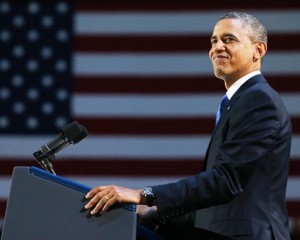
In his re-election speech, President Obama, amidst enthusiastic cheers, made the following declaration to his audience and to all America:
I believe we can keep the promise of our founders, the idea that if you’re willing to work hard, it doesn’t matter who you are or where you come from or what you look like or where you love. It doesn’t matter whether you’re black or white or Hispanic or Asian or Native American or young or old or rich or poor, able, disabled, gay or straight, you can make it here in America if you’re willing to try.
As he built to a crescendo, so did the excitement of the crowd. It was a euphoric moment. Unnoticed, however, was an egregious omission: “born or unborn.” The President’s embracing liberality stopped short at a critical point. The unborn, of course, cannot vote. They are not within the President’s political purview. Those who will be aborted will never have a chance either to vote or “to make it in America.”
G. K. Chesterton famously spoke of the “democracy of the dead,” an expanded notion of democracy that honors the legacy of ideas and institutions that today’s generation has inherited. The now dead were once alive, and, like America’s Founding Fathers, contributed mightily to posterity.
 The unborn, given a chance, can also contribute to posterity. Without realizing it, Obama’s audience was cheering for “exclusive inclusivism.” Would it be “extremist” to honor the unborn? Many think so, and this illiberal attitude is one way of understanding the root of America’s deep division.
The history of democracy is interwoven with the history of exclusion, and we do not need to recapitulate the lengthy list of those groups that were systematically and unjustly excluded. Excluding the unborn, however, is the largest of all exclusions since it excludes everyone, at least for the first nine months of their existence.
Christianity, including sinners, as well as the “halt and the lame,” is far more democratic in its inclusivity than any political democracy has ever been. Being a non-political institution, however, it is not held together by votes. It is held together by a mandate from God to love everyone, including the “least” of God’s “little ones.” One salutary influence that Christianity can have on secular politics, and has had throughout the ages, is to urge inclusion of groups that have been routinely excluded.
Christianity, though very much concerned about worldly affairs, such as “making it in America,” is far more concerned about personal salvation. And God wills the salvation of everyone. St. Augustine’s cities of God and Man clash when the latter is ascribed greater importance than the former. Secular democracy is always limited. Because it inevitably excludes certain groups, it fails to accord the members of such groups the dignity and liberty they justly deserve.
President Obama’s egregious exclusion of the unborn, not only in his acceptance speech, but in his personal opinion and in his political platform, leads us to recall and reflect on the superiority of the spiritual power that belongs to the City of God, over the temporal power that belongs to the City of Man. In his book, The Things that are Not Caesar’s, Jacques Maritain expresses the point eloquently and passionately:
Nothing is more important for the freedom of souls and the good of mankind than properly to distinguish between these two powers: nothing, in the language of the day, has so great a cultural value. It is common knowledge that the distinction is the achievement of the Christian centuries and their glory.
It is encouraging to remember that politics is not religion, and should not presume to be so, and that Christianity will continue to be a source of light and hope for all the well-intentioned democracies that suffer from their own inevitable inadequacies. It is also consoling to recollect that terms of political office are temporary, while God’s term of office is eternal.
 Dr. Donald DeMarco is a Senior Fellow of Human Life International. Doctor DeMarco is a member of the Pontifical Academy for Life and he is Professor Emeritus at St. Jerome’s University in Waterloo, Ontario and an adjunct professor at Holy Apostles College & Seminary in Cromwell, CT.
He is the author of 22 books, including; Architects of the Culture of Death, The Many Faces of Virtue, The Heart of Virtue, and New Perspectives on Contraception. He has authored several hundred articles in scholarly journals and in anthologies, and articles and essays appearing in other journals and magazines and in newspapers; and innumerable book reviews in a variety of publications.
His education includes: B.S. Stonehill College, North Easton, MA 1959 (General Science); A.B. Stonehill College, 1961 (Philosophy); Gregorian University, Rome, Italy, 1961-2 (Theology); M.A. St. John’s University, Jamaica, NY, 1965 (Philosophy); and Ph.D. At. John’s Univ., 1969 (Philosophy). His Master’s dissertation was “The Basic Concept in Hegel’s Dialectical Method” and his Doctor’s dissertation was “The Nature of the Relationship between the Mathematical and the Beautiful in Music”.
He is married to Mary Arendt DeMarco and they have five children.

 PDF
PDF 
I grew up in an Italian neighborhood, so my first understanding of bigotry was that it referred to a very large tree (“Hey, dat’s a big-a tree!”). Now, many years later, I know that it really means supporting traditional marriage. Like President Obama, I have “evolved.” I have advanced on the semantic spectrum from being ethnicized to being politicized. Who needs Noah Webster?
William A. Jacobson is an Associate Clinical Professor at the Cornell University Law School. The sesquipedalian title of the statement he posted on July 29, 2012 encapsulates its essence: “Most important legacy of Obama’s gay marriage switch was freeing Dems to play the ‘bigot card’.” Now, according to Jacobson, Democrats are free to accuse anyone and everyone who supports the traditional understanding of marriage as bigoted. Those who thus stand accused would be nearly everyone in history together with the vast majority of the living. Albert Schweitzer, Martin Luther King, and the Ku Klux Klan would all be tarred by the same brush. And, since the accusers are also being accused of the same abnormality, the number of bigots is now virtually equal to the number of rational bipeds. This sweeping accusation, simply from a logical point of view, should be most disheartening to those who fancy themselves democrats.
 The problem of labeling defenders of traditional marriage as “bigots” has reached near epidemic proportions. Various websites from The Ruth Institute (Aug. 5, 2012) to the Huffington Post (May 11, 2012) report how common this practice has become. Lord Carey, former Archbishop of Canterbury, finds that the accusers are projecting their own bigotry onto the innocent: “People who oppose gay marriage are being treated like homophobes and bigots by those who call for tolerance.” He goes on to suggest that it seems that it is the accusers themselves who personify the venom they spew at their innocent targets (London Telegraph, Aug. 17, 2012).
Jimmy Akin, writing for the National Catholic Register (July 26, 2012) illustrates how easy it is to be called a bigot. In his case, it was simply because he dared to say that being against same-sex marriage does not mean that one is against people who have a same-sex orientation. Is one also a “bigot” for opposing marriage between a mother and her daughter? “When I use a word,” Humpty Dumpty said in rather a scornful tone, “it means just what I choose it to mean – neither more nor less.” Can there ever be harmony in the modern Tower of Babel. The word “babble,” denoting noise or a confusion of different sounds, has its roots in the Biblical story. The Humpty Dumpties of the world are babblers, not builders.
We wonder whether language is still serviceable. “Never,” Aldous Huxley once remarked, “have misused words—those hideously efficient tools of all the tyrants, warmongers, persecutors and heresy hunters—been so widely and disastrously influential.” What would he say if he were alive today to observe the way words are currently misused? He would need to amp up his rhetoric considerably, even though amplification and communication do not necessarily go hand in hand.
The word “bigot” is now routinely used, not to convey meaning, but as a kind of verbal slap in the face, as an expletive rather than as an argument. It signals the end of discourse and an invitation to violence. Demonizing supporters of marriage between a man and a woman does not change minds or hearts; it simply terminates dialogue and welcomes vandalism and warfare.
Ralph Waldo Emerson, that quintessential American essayist, went so far as to suggest that bad rhetoric made bad men. He may be in good company. In Matthew 12:36 we read: “Every idle word that men shall speak, they shall give account thereof in the day of judgment.” According to Confucius, “If language is incorrect, then what is said is not meant. If what is said is not meant, then what ought to be done remains undone.” Former United Nations Secretary-General Dag Hammarskjöld had this to say: “To misuse words is to show contempt for man. It undermines the bridges and poisons the wells. It causes Man to regress down the long path of his evolution.”
We will be judged for our words, as well as for our deeds. On second thought, the politicization of words (and consequently, thoughts) truly is regressive, bringing Homo sapiens back to the time when grunts preceded words, and violence antedated rational communication.
Now where did I put my Webster’s dictionary?
Dr. Donald DeMarco is a Senior Fellow of Human Life International. Doctor DeMarco is a member of the Pontifical Academy for Life and he is Professor Emeritus at St. Jerome’s University in Waterloo, Ontario and an adjunct professor at Holy Apostles College & Seminary in Cromwell, CT.
He is the author of 22 books, including; Architects of the Culture of Death, The Many Faces of Virtue, The Heart of Virtue, and New Perspectives on Contraception. He has authored several hundred articles in scholarly journals and in anthologies, and articles and essays appearing in other journals and magazines and in newspapers; and innumerable book reviews in a variety of publications.
His education includes: B.S. Stonehill College, North Easton, MA 1959 (General Science); A.B. Stonehill College, 1961 (Philosophy); Gregorian University, Rome, Italy, 1961-2 (Theology); M.A. St. John’s University, Jamaica, NY, 1965 (Philosophy); and Ph.D. At. John’s Univ., 1969 (Philosophy). His Master’s dissertation was “The Basic Concept in Hegel’s Dialectical Method” and his Doctor’s dissertation was “The Nature of the Relationship between the Mathematical and the Beautiful in Music”.
He is married to Mary Arendt DeMarco and they have five children.

The family benefits immeasurably when it recites together the Most Holy Rosary of the Blessed Virgin Mary. Almighty God is praised, Our Lady is venerated, the needs of the family are presented and the members of the family prayerfully experience the bond of charity that unites them.
By praying the Most Holy Rosary the family comes to know who the Ever-Virgin is and her mission as well as why the family should recite the Most Holy Rosary.
Our Lady’s Person and Mission
Chosen by God. The Lord Himself selected Mary to become the Mother of God. When the Almighty “predestined” the Son of God to become man, He chose Mary of Nazareth to be His Mother.
Mother of God. During the Church’s Third General Council held in AD 431 at Ephesus, the Church solemnly declared Mary to be the Theotokos (“Mother of God”). The Second Person (Jesus Christ) of the Most Blessed Trinity became man when He was conceived by the Holy Spirit in Our Lady’s virginal womb.
Queen of the Angels. Although Mary did not bring forth the angels from her womb as she did Jesus, she cooperated with Jesus in giving grace to souls. The Angels were aided by her participation in God’s work.
Mother of Human Beings. Our Lady is our mother in the “order of grace” because she has communicated to us the grace that makes us holy sons and daughters of God the Father, brothers and sisters of Jesus Christ the Son of the Father, temples of the Holy Spirit, and sons and daughters of Mary.
Intimate Participant on Calvary with Christ in His Sacrifice and Mediatrix. Our Lady cooperated with Jesus as He sacrificed Himself to His Beloved Father for us! Mary lovingly consented to her Son’s Death. The Church honors her as the Co-Redemptrix because she took part with Jesus in our Redemption, and as the Mediatrix because it is through her, now in Heaven, that grace comes to us.
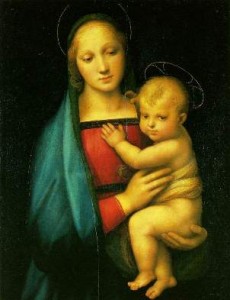 Sinless Disciple of the Lord. The dogma of the Immaculate Conception maintains that Mary never contracted Original Sin. Furthermore, she never committed any “actual” sins, whether mortal or venial. She was exempt from concupiscence (“the tendency to sin”) and the slightest moral imperfection or willful transgression of God’s law.
Perpetual Virgin. The Church has taught for centuries that Mary was a virgin before, during and after the Birth of the Savior. Both Sacred Scripture (Isaiah 7:14) and the Apostolic Tradition express this unchangeable truth. Our Lady is the only woman venerated as both “Virgin” and “Mother.”
Wife of Saint Joseph. Mary and Joseph were really married in the sight of God. That Mary and Joseph never participated in the marital embrace does not mean that their union was invalid. They freely renounced the exercise of this right.
Daughter of the Father and Temple of the Holy Spirit. As the Mother of the Redeemer, Mary is the Mother of Jesus, the Second Person of the Most Blessed Trinity. She is the Daughter of the Father Who created her from nothing and the Temple of the Holy Spirit Who sanctified her by filling her with His life.
Heart Pure and Immaculate. In her Heart, Mary sought after and served God, even unto her total surrender on Calvary. She has a pure and sinless Heart that always preferred God and His Will.
Assumed into Heaven and Crowned. On November 1, 1950, Venerable Pius XII defined that the Blessed Virgin Mary, upon the completion of her earthly existence, was assumed body and soul by the Almighty into Paradise. Crowned as Queen of Heaven and earth, Our Lady prays for us near her Divine Son.
Mother of the Church. The Servant of God Paul VI (1963-1978), on November 21, 1964 in his concluding address to the Bishops gathered in Saint Peter’s Basilica in Vatican City at the third session of the Second Vatican Council, declared: “. . for the glory of the Blessed Virgin and our consolation, we declare most holy Mary Mother of the Church, that is of the whole Christian people, both faithful and pastors, who call her a most loving Mother.”
Why Should the Family Pray the Most Holy Rosary?
By way of the Most Holy Rosary, the family adores God the Father, Who constantly extends His unfathomable mercy; the Son, Who lives in Sacred Scripture and the Church’s Apostolic Tradition and is present in a most unique way in the Most Blessed Sacrament; the Holy Spirit, Who transmits the important truth of how to embrace good fully and avoid evil.
Through the recitation of the Most Holy Rosary, the family answers the urgent summons of Our Lady of Fatima who, during 1917, appeared to Lucia, Francisco and Jacinta, encouraging them to pray the Most Holy Rosary daily for “the end of the War” (World War I). Today, there are plenty of other wars as well as the cause to protect human life that elicits earnest prayers. The family’s prayer list never ends. Our Blessed Mother uses the prayers of the family for much good.
Indeed, the Most Holy Rosary helps the family to pray for all the intentions lodged deep in the Most Sacred Heart of Jesus and the Pure Immaculate Heart of Mary.
Furthermore, the Most Holy Rosary unites the family to all the holy men and women, boys and girls who are reciting (and who have recited) this prayer that Blessed John Paul II hailed as his “favorite.”
Imagine the Poor Souls in Purgatory who look to the family for help as they continue onward to the Everlasting Kingdom.
Imagine the Saints in Heaven who have achieved their goal of perfect union with Jesus in Paradise and who attentively await the family’s arrival.
Imagine the Faithful here on earth who are convinced of the intercessory power of Our Blessed Lady and recognize her God-given ability to change hearts and minds.
The Rosary helps the family to remember always its strong solidarity especially with all the Christians in Heaven, Purgatory and on earth who have recourse to the Madonna through the recitation of her Most Holy Rosary.
The Most Holy Rosary is an inestimable treasure for the family. May the family understand it better and pray it more!
 Monsignor Charles M. Mangan is a priest of the Diocese of Sioux Falls. He was ordained on June 29, 1989 by the Most Reverend Paul V. Dudley, D.D., the Bishop of Sioux Falls. Monsignor Mangan has served as parochial vicar, pastor, Vice Chancellor and Defender of the Bond. He studied Canon Law and Mariology in Rome. Monsignor Mangan worked in the Vatican Congregation for Institutes of Consecrated Life and Societies of Apostolic Life for nearly eight years, having served under Pope John Paul II and Pope Benedict XVI. Currently, he is the Director of the Office of the Marian Apostolate in the Diocese of Sioux Falls, the Vicar for Consecrated Life and the Canonical Adviser to the Most Reverend Paul J. Swain, D.D., the Bishop of Sioux Falls.

“To act follows (or manifests) the being of a thing” is a revered Scholastic axiom, which rendered more tightly in its original Latin form as Agere sequitur esse.
In the 1927 musical, Showboat, Oscar Hammerstein wrote the following words for the beginning of the hit song, “Can’t Help Lovin’ Dat Man,” that demonstrates the perennial validity of these afore-stated axioms:
Fish got to swim,
Birds got to fly,
I gotta love . . .
Nothing is so closed in on itself that it does not have a natural propensity to express what it is. Nothing is completely free of the nature that grounds it in reality.
Concerning the human being, Blessed Pope John Paul II stated in his encyclical Redemptor hominis, that “man cannot live without love. He remains a being that is incomprehensible for himself, his life is senseless, if love is not revealed to him, if he does not encounter love, if he does not experience it and make it his own, if he does not participate intimately in it.” For John Paul, love is primary, even metaphysical. It is man’s basic principle for “self-realization,” his most elementary “person-act.”
Subsequently, the person and the personal love that flows from him are profoundly, intimately, and inseparably bound together. The person and the personal can be seen as two different modes of the same being. Just as it would be wrong to prevent fish from swimming or birds from flying, it would be wrong to prevent or even discourage human persons from loving.
A person, because of the way he is constituted, has a right to be personal, a right, that is, to love. To be an authentic person, then, is to be a lover, to live and act interpersonally, with others through giving and receiving. This point has an important bearing on the unique contribution that John Paul has made for bioethics.
When Cain said to God, “Am I my brother’s keeper?”, as John Paul has remarked in his encyclical, Evangelium Vitae, he was indicating his refusal to accept the responsibility that every person has toward others. Moreover, he was not only refusing to act as a person, but even to acknowledge that he is a person. Cain was making the futile effort to become estranged from his own nature.
Above all, as an academic, Blessed John Paul (Wojtyla) was a “personalist” philosopher. His most important and characteristic intellectual work is The Acting Person, which was first published in 1969 when he was a philosophy professor at the University of Lublin. In this work, he develops the notion that the person, and how he reveals himself through his action, are intimately bound up with each other. “Action gives us the best insight,” he writes, “into the inherent essence of the person and allows us to understand the person most fully.
We experience man as a person, and we are convinced of it because he performs actions.” In elaborating on the inherent unity of the person and the personal, Wojtyla repudiated the closed ego concept of the human being that René Descartes advanced that has had such a profound effect on modern thinking. For Wojtyla, the person is more than the isolated individual that Descartes described, but a person inclined by his very nature to love and form communities of persons with other human beings.
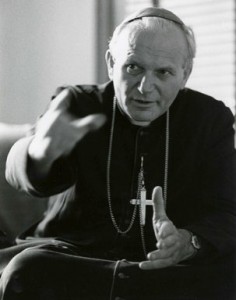 Marriage, as well as the family, are “communities of persons,” as John Paul states in his Apostolic Exhortation, Familiaris Consortio. The community of the husband and wife in marriage represents a particularly intimate and natural unification of the person and the personal inasmuch as it takes on the character of a “two-in-one-flesh” unity.
In repudiating Cartesianism, Wojtyla was also providing strong argumentation against many American psychologists—Carl Rogers, Abraham Maslow, Eric Fromm, Rollo May, Frederick S. Perls, Richard Harris, Nathaniel Brandon, among others—who popularized various brands of individualism.
Paul Vitz, whose careful analysis of this phenomenon appears in his book, Psychology as Religion: The Cult of Self-worship, comments that “when Carl Rogers titles his best known work, “On Becoming a Person,” he is simply wrong. Instead, what Rogers wrote was a book about becoming an individual—an autonomous, self-actualizing individual who is devoted to the growth of the secular self. But he is not talking about the person.”
Rogers, who welcomed the split between the person and the personal (resulting in “selfism” or “unconditional self-regard”), has no treatment at all of love in his book On Becoming a Person. Consistent with his individualistic framework, he predicted that by the year 2000, sex would have almost completely lost its role in procreation. Harvard sociologist Gordon Allport lamented that “A persistent defect of modern psychology is its failure to make a serious study of the affiliative desires and capacities of human beings.”
In the present-day world of bioethics, it is commonplace for people to believe that they can make morally valid decisions based on the notion that they are “autonomous” beings who act for themselves alone and not persons who are called to love others in a personal way.
Consequently, many believe that they have a “right” to have a baby, to take but one example, and to the technology that could satisfy their desires. The “autonomous” person would also have a “right” to abortion, contraception, and other questionable bioethical procedures.
Throughout the two Vatican statements on bioethics, Donum vitae (1987), and Dignitas personae (2008), there are abundant statements indicating that an unbroken continuum should exist between the intimate act of personal love between spouses and the new life that is its fruit.
Reiterating what was written in 1987, Dignitas personae once again honored the “unconditional respect owed to every being at every moment of his or her existence, and the defense of the specific character of the personal act which transmits life.” The dignity owed to the person (of any age) should be extended to those intimately personal acts of love between husband and wife that by their nature invoke new life.
There is no other suitable context than personal love between spouses that is appropriate for allowing love to be extended, without interruption, to a new human being. Because of the dignity inherent in the person, no person should be made an object of anyone else’s desire. Because love is essentially generous, love is the only fitting way to establish a proper relationship with new life.
There have been many personalist thinkers in the modern world. Yet no one has analyzed the nature of the person and the personal love that naturally flows from the person as thoroughly and as extensively as John Paul. His contribution in clarifying the primacy and the inseparability between the person and the personal provides a most significant moral principle undergirding a truly moral bioethics.
No technological intervention should violate the dignity of the person. Moreover, no technological intervention should alienate personal love from the begetting of new life. Respect for new life is a continuation of respect for the person. Therefore, Dignitas personae states that “it is ethically unacceptable to dissociate procreation from the integrally personal context of the conjugal act.”
John Paul, over the course of his life as an academic, priest, bishop, cardinal, and pope, has produced an impressive philosophical and theological argumentation against two popular misconceptions: 1) that a person is an autonomous individual and therefore has the right to employ biomedical technology solely according to his private preferences; 2) that the love that flows naturally from the essence of the human being, especially in the domain of procreation, can be adequately replaced by technological procedures.
The contemporary world, to a significant extent, either misunderstands the nature of the human being as a person, or fails to appreciate the irreplaceable value of personal love.
Blessed Pope John Paul II has redressed these problems with superlative insight. The “acting person” reveals himself through personal love. Such love serves to safeguard and promote the good of other persons. Every person is “inviolable,” “unrepeatable,” and “irreplaceable.” Bioethics can serve man well as long as it does not violate the dignity of the person or disregard the intrinsic value of personal love.
Dr. Donald DeMarco is a Senior Fellow of Human Life International. Doctor DeMarco is a member of the Pontifical Academy for Life and he is Professor Emeritus at St. Jerome’s University in Waterloo, Ontario and an adjunct professor at Holy Apostles College & Seminary in Cromwell, CT.
He is the author of 22 books, including; Architects of the Culture of Death, The Many Faces of Virtue, The Heart of Virtue, and New Perspectives on Contraception. He has authored several hundred articles in scholarly journals and in anthologies, and articles and essays appearing in other journals and magazines and in newspapers; and innumerable book reviews in a variety of publications.
His education includes: B.S. Stonehill College, North Easton, MA 1959 (General Science); A.B. Stonehill College, 1961 (Philosophy); Gregorian University, Rome, Italy, 1961-2 (Theology); M.A. St. John’s University, Jamaica, NY, 1965 (Philosophy); and Ph.D. At. John’s Univ., 1969 (Philosophy). His Master’s dissertation was “The Basic Concept in Hegel’s Dialectical Method” and his Doctor’s dissertation was “The Nature of the Relationship between the Mathematical and the Beautiful in Music”.
He is married to Mary Arendt DeMarco and they have five children.
Speaking to an audience at Oxford University, Bishop Anthony Fisher of the Diocese of Parramatta, Australia declared, “The elderly are not a problem, a market, a budget: They are real individuals, our own people, our ancestors, in due course – ourselves.”
It seems amazing that these words need to be spoken aloud, but Bishop Fisher was responding to a disturbing push by the British National Health Service (NHS) to withhold medical care from the elderly as a cost-cutting measure.
Recently, the British media reported on the increasing use of the Liverpool Care Pathway (LCP) to deny even nutrition and hydration to the elderly who are hospitalized.
Archbishop Peter Smith of the Bishops’ Conference of England and Wales formally requested an investigation into this practice. In spite of growing public concern, a spokesman for the Department of Health responded to the Bishop’s request with, “We continue to fully support its proper use as a way of managing a patient’s care with dignity and respect in their last days.”
There are no plans by the National Health Service to assess the possibility of abuses or inappropriate applications of the Liverpool Care Pathway.
Perhaps more disturbing, the Daily Mail reports that the British National Health Service (NHS) has instructed all primary care physicians to submit a list of their patients whom they anticipate will die in the next twelve months. These patients will be flagged in the system to receive “end-of-life” care only.
The NHS hopes this targeted rationing of care will save more than £1 billion. However, none of these primary care physicians have a crystal ball. They cannot foresee the intricacies of any given patient’s health care needs a full year in advance.
Certainly it is desirable to discuss general principles of end of life care with patients in order to understand their desires and expectations. But decisions about the specific level of care each patient receives should be based on the patient’s or the patient’s surrogate’s assessment of the benefits and burdens of a particular treatment as determined at the time the care is needed.
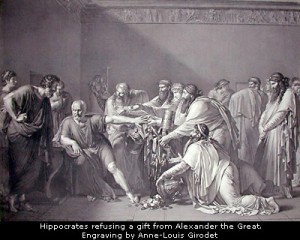 There are too many variables to make definitive decisions twelve months in advance. There is also no avenue of appeal for patients who have been flagged by their primary care doctors for minimal care only.
These worrisome trends in Great Britain should serve as harbingers of things to come in the United States. The Affordable Care Act, commonly known as Obamacare, is positioned to pursue this same path of health care rationing.
There is a veritable alphabet soup of agencies and committees designed to minimize the health care given to select populations in America in order to cut health care costs. The Federal Council Coordinating Comparative Effectiveness Research (FCCCER) , Patient Centered Outcome Research Institute (PCORI) , and Accountalbe Care Organizations (ACO) are all established to save money by decreasing the care that is given.
The PCORI is currently funded at the level of $600,000 per year and tasked with finding ways to decrease health care spending. That means it has to find a minimum of $600,000 worth of savings every year just to justify its existence. What cannot be saved with increased efficiency must be made up with decreased care.
Accountable Care Organizations will dramatically change the doctor-patient relationship. These associations of doctors, hospitals, and ancillary health care services join forces to treat patients as cheaply as possible. They will receive a lump sum payment for each patient. They make money when they spend less than this amount on patient care and lose money when they spend more.
Each physician will be held accountable for the health care spending he generates. Therefore, instead of focusing squarely on the welfare of his patients, a physician’s primary responsibility will be holding the line on spending and maximizing the ACO profits. Failure to do so can result in sanctions and financial penalties.
Defenders of the Affordable Care Act point to a provision in section 3403 of the ACA that sets up the Independent Payment Advisory Board (IPAB). The law explicitly states the IPAB is prohibited from making “any recommendation to ration health care, raise revenues or Medicare beneficiary premiums … increase Medicare beneficiary cost-sharing (including deductibles, coinsurance and copayments), or otherwise restrict benefits or modify eligibility criteria.” This provision has no effect on the FCCCER, the PCORI, and ACO’s that are setting practice guidelines.
A closer look at those who guided the legislation may help us understand what little protection this provides. Dr. Ezekiel Emanuel, one of the chief Obama health care advisors and a primary architect of the Affordable Care Act has kept up a steady stream of articles in the Journal of the American Medical Association (JAMA) and the New England Journal of Medicine (NEJM) trying to reassure physicians that the Affordable Care Act is going to be a boon to American health care.
Dr. Emanuel, however, is a champion of utilitarian ethical principles. He believes that patients can be judged according to their value to society and it is reasonable to allocate care accordingly. In one of his papers he argues that care can be rationed according to the investment society has made in a given patient. For example, he states a fifteen-year-old deserves more care than a three-year-old because society has invested more in the formation and education of the fifteen-year-old. From Dr. Emanuel’s perspective, prioritizing the efficiency of the entire health care system over the needs of individual patients is a desirable outcome of health care reform.
Much attention has rightly been focused on the power of the HHS to mandate that certain medical services, specifically contraception, sterilization, and abortifacients be covered by insurance. It is important to remember that the Affordable Care Act also gives the HHS the power to restrict services that are deemed excessive.
Nutrition and hydration may become a privilege of the young and healthy for the sake of efficiency. But the elderly and the disabled are not inconveniences to be marginalized and discarded. They are not cogs in some nebulous health care system. They are unique individuals; mothers, fathers, daughters, sons, brothers, and sisters. They each deserve to be regarded with full human dignity and their lives must be fully respected. Decisions about care must be tailored to the individual situations and should be made by the patient in consultation with his doctor at the bedside– not by bureaucrats in a remote office.
Regardless of this November’s election results, we all need to remain on high alert to make certain that the Affordable Care Act is not allowed to grow into what is already common in Europe, a means of getting rid of the least convenient members of society.
 Dr. Denise Jackson Hunnell is a Fellow of Human Life International. She graduated from Rice University with a BA in biochemistry and psychology. She earned her medical degree from The University of Texas Southwestern Medical School. She went on to complete a residency in family medicine at Marquette General Hospital, Marquette, Michigan.
Upon completion of her training, Dr. Hunnell served as a family physician in the United States Air Force. She was honorably discharged. She continued to practice medicine all over the country as her husband’s Air Force career kept them on the move. In order to better care for her family, Dr. Hunnell retired from active clinical practice and focused her professional efforts on writing and teaching. She has contributed work to local and national Catholic publications as well as to secular newspapers including the Washington Post and the Washington Times. She also teaches anatomy and physiology at Northern Virginia Community College Woodbridge Campus. Her affiliations include the American Academy of Family Physicians, The Catholic Medical Association, The Fellowship of Catholic Scholars, and the National Catholic Bioethics Center. She received her certification in health care ethics from the National Catholic Bioethics Center in 2009.
Dr. Hunnell has been married for nearly thirty years to Colonel John F. Hunnell, an Air Force test pilot. They have four children and are blessed with one grandchild so far.
