


Lies come in a wide variety of shades. There is the white lie, the misrepresentation, the falsehood, the equivocation, the fabrication, the prevarication, and—my favorite—the terminological inexactitude. At the dark end of the spectrum there are lies that people in authority disseminate with the intention of deliberately deceiving others in order to endanger their lives. These are vicious, monstrous lies. They are inexcusable and condemnable. In this case, the lie is more than a lie in the sense that it more venomous than the usual meaning of a lie as an intentional departure from truth.
Medicine, because of its alliance with science, has an honored history of using language in as precise and correct a way as possible. Yet, in recent years, members of this distinguished profession, together with their supporters, in the interest of protecting an ideology, have strayed from this exalted standard. Some have referred to abortion as a person’s “second chance to practice contraception”. The unborn child has been called “marmalade,” “gametic material,” “undifferentiated protoplasm,” a “parasite,” a “vampire,” and a “gobbet of meat”. VIP became a code word for “Voluntary Interruption of Pregnancy”. PVS referred to a person who had slipped into a Permanent Vegetative State. Doctors at Mt. Sinai Hospital performed an abortion on a woman who was carrying twins, one of whom had Down Syndrome. The doctors exsanguinated the unwanted child, reducing him to papery vestige of what he had been. The euphemism that was invented to rationalize this procedure was “selective delivery of discordant twins”. This deliberately misleading expression omits the fact that one child was killed, while fabricating a “discordant” relationship between the twins who were merely different in a particular way.
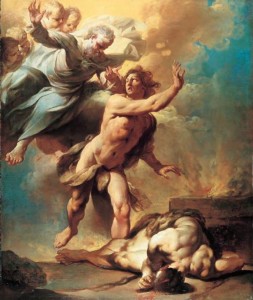 Dag Hammarskjöld, former Secretary-General of the United Nations, understood the critical importance of being faithful to the meaning of words. “Respect for the word,” he wrote in his highly praised book, Markings, “is the first commandment in the discipline by which a man can be educated to maturity—intellectual, emotional, and moral.” He strongly encouraged people to use words “with scrupulous care and an incorruptible heartfelt love for the truth.” How easily, these days, words deviate from the truth. The matter has always been most serious. St. Matthew warns us in 12:36 that “Every idle word that men shall speak, they shall give account thereof in the day of judgment.”
Cardinal Thomas Collins of Toronto has made a presentation to the Special Joint Committee on Physician-assisted Dying on behalf of the Coalition for HealthCARE and Conscience (February 3, 2016). Attentive to the Committee’s misuse of language, he stated that “there is an absolute difference between dying and being killed.” His distinction is most important and warrants further explication.
We are all dying. In fact, we are dying the moment we are conceived. Dying has a second meaning, however, when a person’s death is imminent. Nonetheless, dying in either case is not the same as being killed. We do not need to be killed in order to die. What logically comes to mind when we think of the expression “physician-assisted dying”? We may think of palliative care measures, personalized medical attention, the welcoming to the hospital of loved ones. Medical efforts to make dying easier are examples of a physician assisting a person who is dying. Dying happens by itself, apart from the intervention of physicians. Dying takes place without an agent. We die, naturally, so to speak. Killing is quite another thing. The Committee is recommending killing but lacks the integrity to describe it for what it is. One might as well say that there is no such thing as war. It is just that sometimes there are a lot of people assisting others in the process of dying.
And it is precisely because killing is killing (and contravenes the Commandment, “Thou shall not kill”) that the Cardinal goes on to state that “It is our moral conviction that it is never justified for a physician to help take a patient’s life, under any circumstances.”
The Committee’s title is a misnomer for a second reason since it opens the door to killing people for whom death is in no way imminent. It endorses euthanasia for psychological reasons. The range of people eligible for physician-assisted suicide can become quite broad. Once the camel’s nose is in the tent, the rest of him soon follows. Cardinal Collins addresses this problem. “The right to be put to death will,” he writes, “in practice, become in some cases the duty to be put to death, as subtle pressure is brought to bear on the vulnerable.” What effect will this slippery slope have on the integrity of the medical profession, its reputation, and its trustworthiness?
Serious proposals for physician-assisted killing in itself diminishes the sacredness of human life. The Committee, however, devalues human life even further by not honoring the minimal standard of “truth in advertising”. Will respect for conscientious objection be maintained? Will killing under medical auspices come to be thought of as a legitimate part of health care?
The right to be told the truth, especially in matters as grave as life and death, must be seen as more primary than any so called “right” to be put to death. The Committee has made a disingenuous report, one that should outrage any thinking Canadian. Cardinal Collins’ presentation speaks to all Canadians. He deserves equally broad support.