


Beautiful, romantic love stories abound in literature from folktales like Cinderella and Sleeping Beauty to the happy marriages in Louisa May Alcott’s books like Little Women and Jane Austen’s novels like Pride and Prejudice. These stories testify to a dream come true, the fulfillment of the deepest desires of the heart that come to fruition through surprises and coincidences that indicate the hand of Divine Providence. These love stories endear the heart and inspire retelling and reminiscing not only because of the unexpected discovery of the beloved in the most unpredictable of ways, but also because of the many chapters of the married couple’s story of love that touch the lives of their children. The falling in love is only the beginning of the story of a long novel. The love story does not climax at the moment of falling in love or on the day of the happy marriage that abounds in joy. In the middle and final chapters, the love story reaches its greatest heights of delight in the blessings of children and grandchildren that give the romance its great destiny.
Everyone finds a natural human interest in the way that married couples first met and fell in love, when and how a man proposed to the woman, whether or not she said yes, maybe, or “I need more time”. As children grow older, they naturally want to know the background of their parents’ love story, the history of the extended family, and the origins of their own cultural heritage. Every human being is a part of a story, and every child’s life encompasses the romance of his mother and father and the history of his parents’ families and ancestors. These love stories have chapters that compare to the beginning, middle and end of a drama, chapters that have a natural progress from a man and woman once being strangers and then becoming friends and next falling in love. From sweethearts to engaged couples to married spouses, their lives progress to silver and golden anniversaries that recall the wonder, design, plan, and meaning their marriage holds for them and their offspring. These beautiful stories evoke astonishment, and parents relish telling their love story to their children and to relive it in memory. As great literature illustrates, the love story remains a subject of inexhaustible wonder and human interest whether it is the love of Odysseus and Penelope in the Odyssey, Darcy and Elizabeth Bennet in Pride and Prejudice, or Kitty and Levin in Anna Karenina.
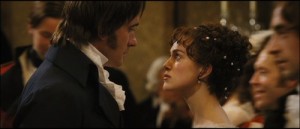 The modern decline in marriage, the substitution of cohabitation as an alternative to romance and courtship, same-sex unions, surrogate motherhood, and the prevalence of divorce all destroy the reality of the happy love story with its surprises, adventures, children and happy endings. To live together without the reality of promises, vows, duties, and commitments “till death do us part” does not initiate a story in which one marvels at what will happen next as couples embrace the destiny of the unknown future pledged to one another with solemn vows of fidelity “for better, for worse”; for richer, for poorer”; and “in sickness and in health”. In cohabitating relationships, couples have no binding obligations to remain true, have uttered no public vows or religious promises before God, and have made no lifelong commitment to one another or to their children that will inspire constancy and loyalty throughout the many vicissitudes of fortune. More often than not, these relationships have no story, drama, or blessings that culminate in happy endings or fruitful marriages that inspire contemplative awe at the miracle of love’s growth and destiny—a culmination described in the the concluding sentence of Little Men: “For love is a flower that grows in any soil, works its sweet miracles undaunted by autumn frost or winter snow, blooming fair and fragrant all the year, and blessing those who give and those who receive.”
The tragedy of divorce also frustrates the unfolding drama of a love story with its many turns. The love story that begins in romance, progresses to marriage, matures to parenthood and family, then abruptly and violently aborts without the drama reaching its natural conclusion. The sowing is never followed by the reaping; the early days of marriage do not yield the harvest and abundance of the later years of seeing the happiness of children and grandchildren as the fruitfulness of love—an experience that Mrs. March in the final chapter of Little Women cherishes as the ultimate in human happiness: “Oh, my girls, however long you live, I can never wish you a greater happiness than this.” Celebrating her sixtieth birthday during the New England holiday of the apple picking harvest, Mrs. March beholds the whole story of the book of love from its simple, humble beginnings to its copious fruition in the overflowing joy she experiences in witnessing the blessed marriages and joy-filled lives of her children and grandchildren. Like abortion that does not let the child fully develop in the womb, divorce does not allow the seed and planting of love to bear its abundant fruit.
Surrogate motherhood that requires third parties and elaborate medical intervention and technology lacks the surprise of love’s birth and the wondrous conception of the child. The child born of medical engineering is not conceived from the mutual giving and receiving of love in self-donation and surrender that forms the love story of each person born into a loving family. True love loses its intimacy—the two becoming one flesh—and the special bond between parents and their offspring also suffers a loss of the indissoluble physical union that makes love incarnate. Despite the legalization of same-sex unions and the adoption of children these couples seek in the name of establishing families, no love story with its beautiful idealism and noble aspirations forms the history or background of such relationships that do not conform to Nature’s plan or God’s design. Every person deserves a love story as the prelude to his life, not a new medical development or a reinvention of the meaning of marriage or family.
These love stories always depict the mystery of the sexes and the revelation of the beloved as a gift from God, an answer to a prayer, or a dream come true. Two people who were once strangers cross paths. Their coincidental meeting proves not to be accidental or random, but providential and intended by God’s wisdom that created this man for that woman. In a love story, the man and woman experience a sense of being in tune with Nature, God, and a higher law that shapes their destiny and gives a wise and holy design to their lives. In a love story, a person feels powerfully attracted, mysteriously called, and divinely inspired to say yes, to promise undying fidelity, to be fruitful and multiply, to suffer, sacrifice, and surrender for the beloved, and to embrace the whole plan of love’s possibilities and the unknown vicissitudes of the future. A true love story is a great and glorious adventure of discovery and accomplishment that the imitations of love and substitutions of marriage fail to achieve.
A child that is a character in a love story senses the gift of life and knows that his parents longed to share the copious goodness of creation and their bountiful happiness with their offspring. The child of divorce often questions the love of his parents. A child that feels a part of his parents’ love story not only feels blessed and grateful for love’s generosity, but also glad of the grace he brings into their life. The child of a fatherless family does not experience this sense of belonging and easily conceives of himself as a burden or inconvenience. The child of a love story knows the joy of being the apple of his mother and father’s eye, but the child of surrogate motherhood cannot naturally feel this intimate bond of being conceived in his mother’s womb in the flesh in the way a man knows a woman.
 Mitchell Kalpakgian, Ph.D. has completed fifty years of teaching beginning as a teaching assistant at the University of Kansas, continuing as a professor of English at Simpson College in Iowa for thirty-one years, and recently teaching part-time at various schools and college in New Hampshire. As well as contributing to a number of publications, he has published seven books: The Marvelous in Fielding’s Novels, The Mysteries of Life in Children’s Literature, The Lost Arts of Modern Civilization, An Armenian Family Reunion (a collection of short stories), Modern Manners: The Poetry of Conduct and The Virtue of Civility, and The Virtues We Need Again. He has designed homeschooling literature courses for Seton Home School, and he also teaches online courses for Fisher More College and Fisher More Academy.


