


Humility, we are told, is the foundation of our spiritual life. In the Scriptures, we read that God rewards the humble, but he rejects and smites the proud. “Do not fret because of the wicked, be not envious of wrongdoers! For they will soon fade like the grass, and wither like the green herb. Trust in the Lord, and do good; so you will dwell in the land, and be nourished in safety” (Psalm 37:1-3 RSV). Also, “Good and upright is the Lord; therefore he instructs sinners in the way. He leads the humble in what is right, and teaches the humble his way” (Psalm 25:8-9). But knowing what true humility is can be difficult, especially when living our daily lives in the midst of the world around us. It is always worthwhile to take another look at humility as described by the great spiritual writers and contemplate how to apply their words to our own lives.
In the Introduction to the Devout Life (Ignatius Press, 2015), St. Francis de Sales metaphorically compares our lives and work for the Lord to vessels. He first cites a passage from the Old Testament, when Elisha gave instructions to the widow: “Go outside, borrow vessels of all your neighbors, empty vessels and not too few” (2 Kings: 4-3). Of this passage, St. Francis says, “In order to receive God’s grace in our hearts, they must be as empty vessels—not filled with self-esteem” (p. 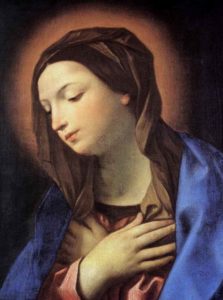 78). A jar or vessel is designed specifically so that it might be filled with something—thus, in a similar way, our hearts must be open to the Lord. We must be willing and ready to be filled with whatever he desires to give us. As St. Francis continues, “If you want to know whether a man is really wise, learned, generous or noble, see if his life is molded b humility, modesty, and submission” (p. 79). Thus, the humble man submits himself to the Lord’s commands, so that he might be filled with the Holy Spirit, who will guide him in his pursuit of God.
Such a man who has become a vessel, according to St. Francis, is able to consider the gifts given to him by God without any pride or vainglory. As he explains, “Anyone who will calmly consider what he has done without God, cannot fail to realize that what he does with God is no merit of his own; and so we may rejoice in that which is good in us, and take pleasure in the fact, but we shall give all the glory to God alone, who is its author” (p. 81). Here he mentions the Blessed Mother, who, in her Magnificat, declares, “My soul magnifies the Lord, and my spirit rejoices in God my Savior, for he has regarded the low estate of his handmaiden” (Luke 1:46-48). Even though Mary says that she will be called blessed by all generations, this is not pride, but a sign of true humility, for she recognizes that God has done marvelous things in her life. She knows that God has acknowledged her lowly state, and seeing that she did not consider any of his gifts to be her own, he chose her to bear the Savior of the world.
St. Francis continues, writing of how we must become abject in order to be humbled and filled with God’s graces. He writes of Our Lady again, mentioning that she “accepted her abjection and lowliness in order to fill her with graces and favors” (p. 84). Abjection and humility, however, are two different things, for “humility implies real knowledge and voluntary recognition of that abjection” (Ibid). He goes so far as to say that we should rejoice in abjection, which is done by means of humility. In other words, when we are faced with sufferings—whether spiritual or physical—we ought to rejoice that God has given them to us, “to give the more glory to God’s divine majesty, and to esteem one’s neighbor more highly than one’s self” (p. 85). While St. Francis explains that we should do everything to remedy certain situations of abject suffering, “the greatest abjections are best; and the greatest is whatever is contrary to one’s individual inclination, so long as it is in conformity with one’s vocation” (p. 86). In other words, we ought to desire for the abjections that are contrary to our natures (for example, if we are annoyed easily by loud people, we should desire the opportunity to talk with them), and we should rejoice when those opportunities are given to us by God.
Fr. Reginald Garrigou-Lagrange, O.P., a great Thomist theologian who assisted in Pope St. John Paul II’s theological formation, echoes these words in his collection of retreat talks, entitled Knowing the Love of God (Ignatius Press-Lighthouse Catholic Media, 2015). He writes, “The distinctive act of humility consists in bowing down toward the ground…To abase ourselves before the Most High means to recognize our inferiority, our smallness, and our indigence not only theoretically but also practically” (p. 80). Thus, when we humble ourselves, we are not merely doing so because it is our duty. Rather, we abase ourselves for the love of God, even though it contradicts everything the world upholds. We humble ourselves before God, therefore, to become more like Christ, who came so that we might not be of the world (cf. John 15:19). Christ gives for us the example of the greatest abasement, as we read in Isaiah, “Surely he has borne our griefs and carried our sorrows; yet we esteemed him stricken, struck down by God, and afflicted” (Isaiah 53:4). Because Christ accepted the most grievous suffering of all—death on the cross—he showed the greatest humility. In bearing the cross, he was “wounded for our transgressions” and “bruised for our iniquities” (Isaiah 53:5), but this was all for the glory of his Father in Heaven and for our salvation (cf. John 17:1-3).
Moreover, Garrigou-Lagrange adds that humility is actually united with magnanimity, a virtue assigned by Aristotle to an individual who possesses a “great soul.” In reflecting on the Miserere (Psalm 51), Garrigou-Lagrange writes, “Humility, far from being opposed to grandeur of soul, is intimately united to it. Thus the true Christian ought to aim at great things, worthy of a great heart” (p. 85). These “great things,” however, are not the things of the world, such as money, power, and fame. Rather, the greatness that the humble man aspires to is the knowledge that he is doing the will of God in his life. Garrigou-Lagrange even says, “Humility and magnanimity are two complementary virtues that sustain one another like the two arches of a vault” (p. 86-87). We see this exemplified in Christ’s life, as the theologian explains, because he came both to serve and not be served, which is humility, and to redeem sinners from slavery to sin, which is magnanimity (cf. Matthew 20:28). In our own lives, we are called to sacrifice our lives for God and for others (in whatever form that may take) and joyfully minister to others in whatever vocation God has given to us.
Thus, in embracing humility in our own life, we ought to strive to become like the Blessed Mother and Christ, as shown by the great spiritual authors, St. Francis de Sales and Fr. Reginald Garrigou-Lagrange, who themselves were great models of humility. God exalted the Blessed Mother because of her lowliness, and she recognizes that she is a simple handmaiden for bringing about the Kingdom of God—this is why she is given the gift of bearing the Son of God. In a similar way, God glorified his Son through his death on the cross. As we read in Philippians: “And being found in human form he humbled himself and became obedient unto death, even death on a cross. Therefore, God has highly exalted him and bestowed on him the name which is above every name” (Philippians 2:8-9). We too ought to pursue this great virtue of humility, allowing ourselves to be lowered so that God can do marvelous things with us in our current state of life or vocation.
 Veronica Arntz graduated from Wyoming Catholic College with a Bachelor of Arts in Liberal Arts, which included courses in humanities, philosophy, theology, and Latin, among others using the Great Books of Western thought. The title of her senior thesis was, “Communio Personarum Meets Communionis Sacramentum: The Cosmological Connection of Family and Liturgy.” She is currently pursuing a Master of Arts in Theology from the Augustine Institute.


