


The growing tendency to resort to cremation is eroding the longstanding Christian tradition of burying the dead. One who considers both the sources of this tradition and Church teaching finds good reason for the Church’s belief that burial is strongly recommended over cremation. Regardless of what the supposed benefits of cremation may be, we would do well to consider both relevant Church teaching on the matter and possible unintended effects of the trend toward cremation. In truth, a reverent burial of the dead is consonant with, and supportive of, a pro-life worldview.
It is clear that cremation is less expensive than burial, but this does not by itself end the debate. It is also true that cremation can actually hinder a healthy mourning process by thwarting a family’s ability to fully confront the mystery of death in the presence of a body that can be recognized in love.
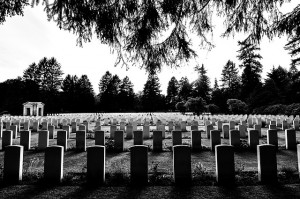 The Church has long held that burying the dead is a work of mercy. It is unfortunate that like many beautiful and meaningful traditions, this belief has lessened like so many other aspects of tradition. Indeed, this tradition did not necessarily end with the burial itself: extended family would usually take care of the tombs of their relatives and ancestors.
The tradition of burial dates to the earliest days of the Church. The early Church retained the Jewish practice of bodily burial and rejected the common pagan Roman practice of cremation. In the 19th century, cremation again arose as a common practice in Europe, due greatly to the rise of a rationalistic philosophy that denied any notion of the supernatural or spiritual. Other reasons cited at the time were concern for hygiene and the conservation of land, yet it became common in some places to make a public display of the denial of the immortality of the soul, any form of afterlife and the resurrection of the body. Also somewhat common at the time was the pantheistic tendency to have the ashes of the deceased reunited with the earth.
Following a long-standing tradition that has its roots in early Christianity, the code of Canon Law of 1917 forbade cremation (can. 1203). In the Instruction of the Holy Office Piam et Constatem of 1963, it was stated that every effort should be made to maintain the custom of burying the bodies of the faithful, thought it also permitted cremation. This instruction on permitting cremation took a prudential step that went against a multi-secular custom of the Church.
This position was affirmed in the current code of Canon Law, which in c. 1176 § 3 states: “The Church earnestly recommends that the pious custom of burying the bodies of the deceased be observed; nevertheless, the Church does not prohibit cremation unless it was chosen for reasons contrary to Christian doctrine.”
If we interpret this canon in accordance with the mind of the legislator and the constant tradition of the Church, it is evident that the preferred form is burial and not cremation. It is wise to do and to encourage others to do what is part of the constant tradition of the Church and what is considered more perfect. There are cases in which cremation could be considered acceptable or even unavoidable, for example if a society needs to dispose quickly the bodies of the victims of a massive epidemic and there are risks of the transmission of disease, or when there has been a massive natural disaster and there are no means available to properly bury the victims. Some further points that deserve consideration as well.
Burial expresses more clearly the faith in the resurrection. True, the Lord does not need of the physical body to grant resurrection. He can and will raise the bodies of persons whose bodies have been totally decomposed and no physical trace whatsoever of them remains on this Earth. But it is more coherent with the hope of resurrection to respectfully preserve the body of a deceased person with the hopeful expectation that this particular body that today we are placing in a tomb will be resurrected at the Second Coming of the Lord. Historically, Christians buried their dead both out of respect for the body and in anticipation of the resurrection at the Last Judgment. St. Paul reminds us, “the Lord Himself will come down from heaven at the word of command, at the sound of the archangel’s voice and God’s trumpet; and those who have died in Christ will rise first” (1 Thes 4:16).
In the preface of the burial Mass we affirm that “the sadness of death gives way to the bright promise of immortality” and “that life is changed, not taken away.” Burying the dead is a strong symbolic affirmation of this belief that the deceased is in some way still with us. Instead, cremation gives an image of hopelessness with the total destruction of the body—asymbol of nothingness and desolation. Symbols are important because they send a message that touches the heart and the mind in a stronger way than what we can expresses with mere words.
If we believe with hope that our loved ones have not completely ceased to exist with their death–that death does not have the final victory–we will also be more likely to believe in the reality of the life of the unborn child who is hidden in the womb of his mother. It is in this sense that burial of the dead increases our pro-life commitment just as it affirms our belief in the world to come. A strong belief in Heaven was long held as one of the strongest motives to have children: parents are giving birth to persons that have a vocation to adore God for ever eternal and growing joy with the Blessed Virgin Mary all the saints and the elect.
Burial follows the example of Christ, whose body was not cremated but placed in a dignified sepulchre. This was done, of course, per the Jewish practice of burying the dead, but also in preparation for His resurrection. The empty tomb, interpreted by the announcement of the angels that proclaimed His resurrection, is an excellent image of our hope in our own resurrection.
The practice of burial stresses the reverence that it is due to the body of one who is a member of the Body of Christ, and whose body is a temple of the Holy Spirit. We have to remember that our bodies were created by God in tandem with our immortal souls, which are the form of the body. This human form, already made in the image of our Creator, received a very special dignity with the incarnation of Jesus Christ, who imaged His Father more perfectly than any other human person.
Cemeteries provide a salutary reminder that our life one day will come to an end and we will be judged by God. In many ancient Church yards in Europe, the tombs still read: “Remember that one day I was what you are now, and that you one day you will be what I am now.” Further, cemeteries remain a constant reminder of our obligation that we have in justice to pray for the souls of our deceased loved ones and all the faithful departed. Praying with the family at the graves of our loved ones strengthens the family bonds of the living and shows the importance of the preservation of family union.
In cemeteries, sections have been reserved or memorials placed for the bodies of those babies killed by abortion. This is a very commendable practice because it reminds all visitors that the unborn killed by abortion are human beings and as consequence have the right to be duly buried in a cemetery.
Setting aside the practical considerations of burial versus cremation, let us concentrate on the great spiritual advantages of burial. It may seem paradoxical to some that proper treatment of the dead actually affirms life and the living, but with a view to the dignity of man and his eternal destiny, there is great reason to preserve the practice of burial.
 Monsignor Ignacio Barreiro is the director of Human Life International’s office in Rome. He was ordained a priest for the Roman Catholic Archdiocese of New York on Nov. 14, 1987. From the beginning of his priestly ministry, Monsignor Barreiro was involved in the Pro-Life and Traditional Latin Mass apostolates. He received his licentiate and doctorate degree in Systematic Theology from the University of the Holy Cross, in Rome, Italy. For a period of time in the 1990s, Msgr. Barreiro served in the Priestly Fraternity of St. Peter.
Since September 1998, Msgr. Barreiro has been the Executive Director of the Rome office of Human Life International. In Rome, he started an apostolate with priests and seminarians from all over the world who are studying in the Eternal City. Msgr. Barreiro has published hundreds of articles on theological and life issues, and historical subjects in popular and scholarly publications. He was appointed a Chaplain of His Holiness on March 26, 2004.


